
Iris (Rainbow) Agates
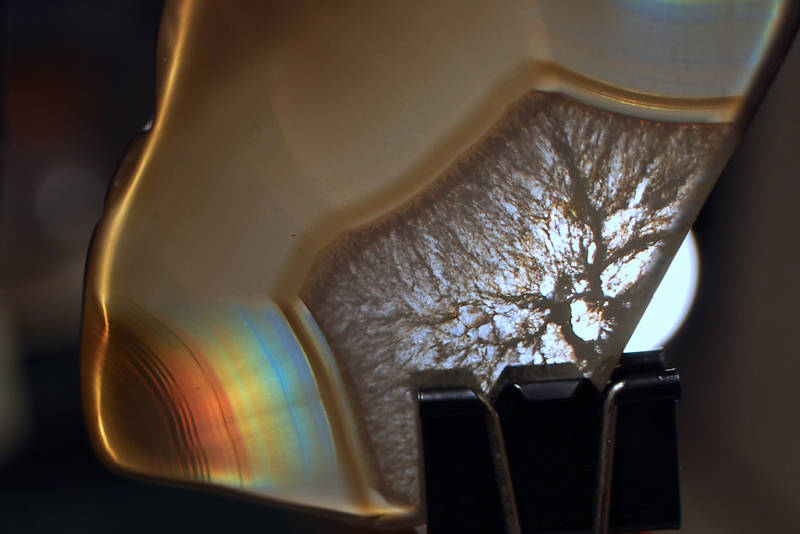
Iris agate owes its spectral colors to the presence of a diffraction grating structure. The iris agate grating structure results from the segregation of alternate layers having higher and lower refractive indexes during crystallization of the needles or fibers of chalcedony.
Iris is observed in highly polished and thin cut agate (about 1.5mm or 1/16th inch) up to about 6mm or 1/4 inch. The iris is observed by placing the specimen in front of a light source at about arms length and moving the specimen until the light passing through the specimen reveals the spectral colors. It must be viewed at the correct angle to see the Iris effect.
"A specimen which shows primary colors in very thin section may show only pastel colors if it is cut too thick. If the line spacing is not quite uniform only pastel colors may be seen, and if it is very irregular only a chatoyance will be observed." The conditions for Iris to occur are quite specific. When the conditions are close but not good enough then the occurrence is chatoyance and not Iris. Simply put, If there is not a play of color, it is not Iris.
(quotes from American Mineralogist Vol 37 pages 578-587, published in 1952)

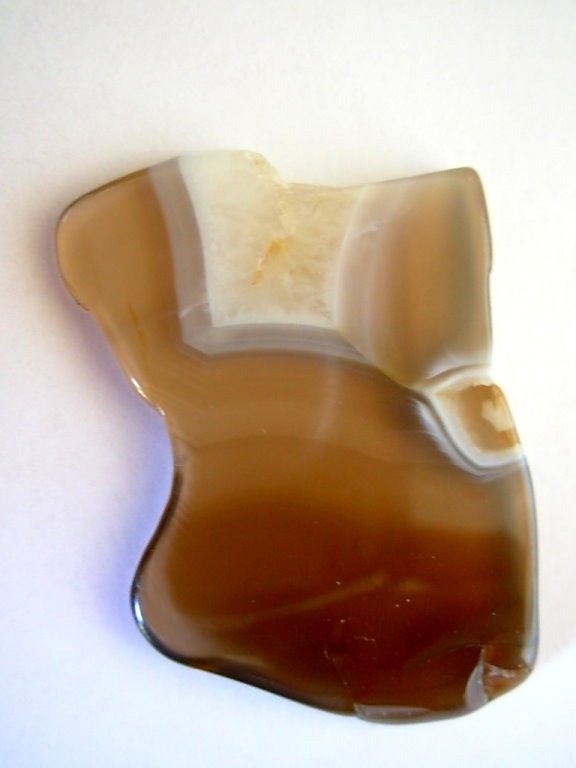
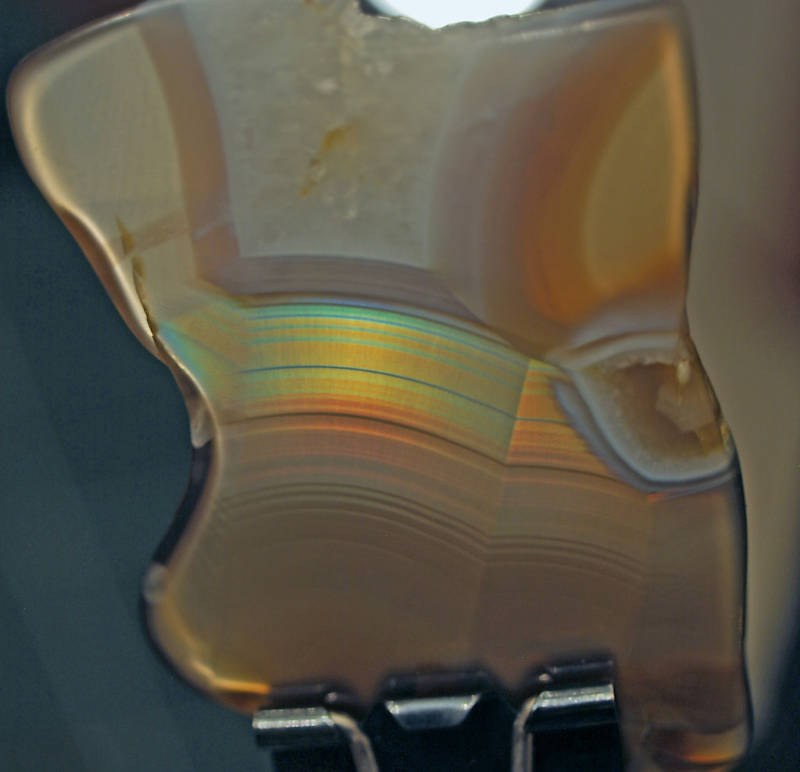
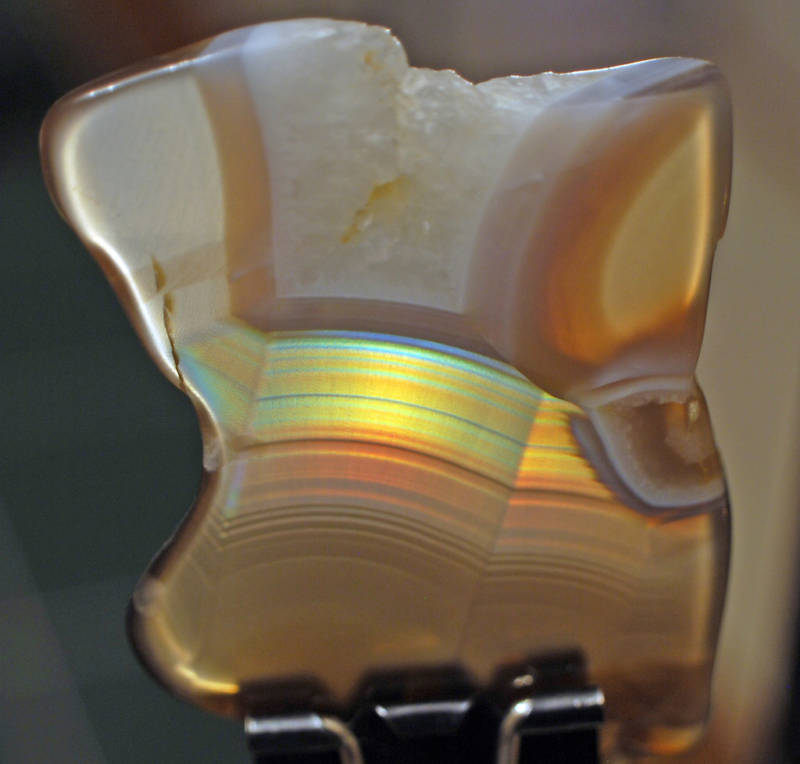

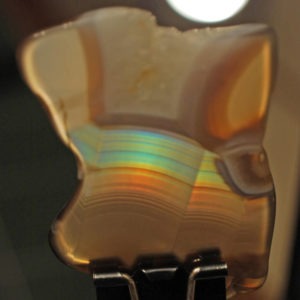
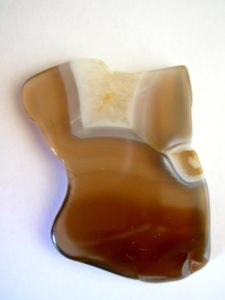
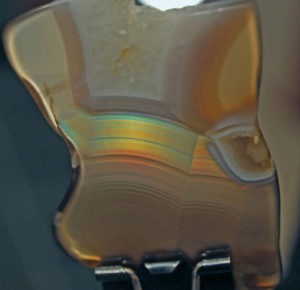
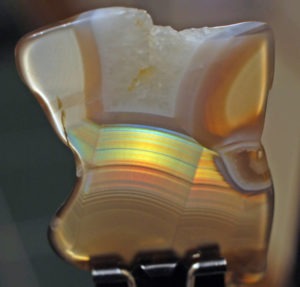
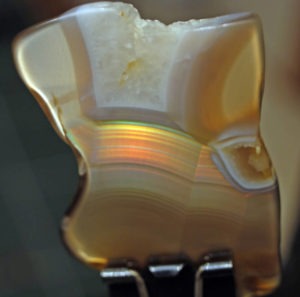
Item# HMIA0510S00531
Polished Horse Mountain Iris Agate

HORSE MOUNTAIN IRIS AGATE...ONE OF AMERICAS FINEST HIGH GRADE IRIS AGATES
This material is from closed sites in middle Tennessee and while relatively unknown today to all but some old time rock hounds, this is some of the WORLDS BEST. There are two basic types of Iris from Horse Mountain and the first is the clear to whiteish material common to all iris sites.
The second is unique for U.S. material as far as we know and has a brown body color to the agate. Other sites may have blobs of color or dendrites but not the brown body color. Mentioned in Judith Zeitners " APPALACHIAN MINERAL & GEM TRAILS " in 1968 this material has been depleted long ago.
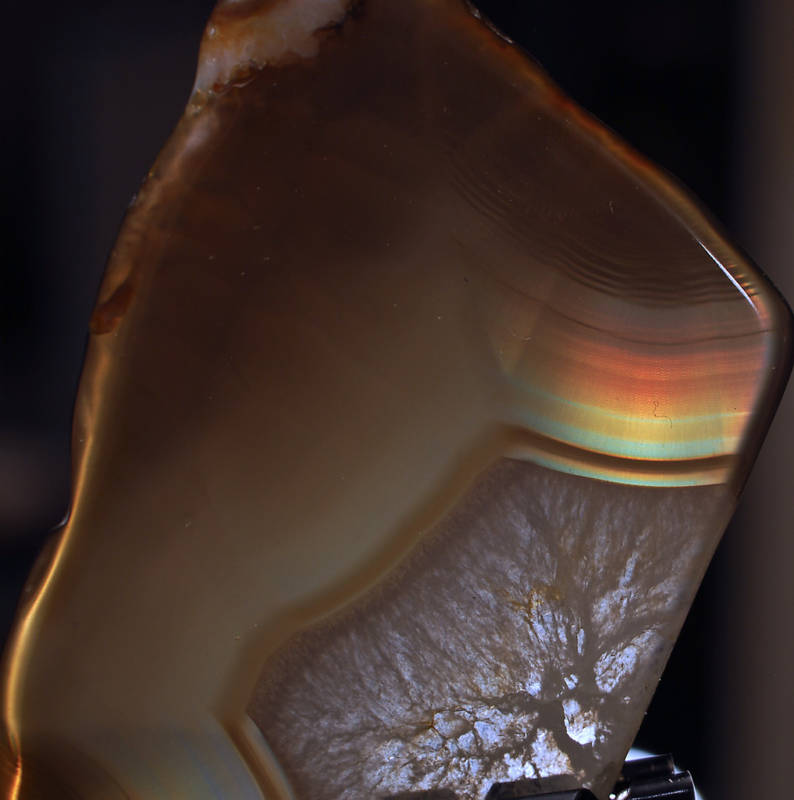
This stone is backlit with a 40w incandescent bulb for pictures and the camera is a Nikon D40X using an 18-55 Nikon lens and usually used with a Mercury Optics 52mm 0.45x macro lens. While viewing these pictures (taken by Rockman 836 Lapidary) please remember that the camera shows greater detail of the stone than is generally visible with the naked eye.
Please note; although we are lucky enough to have a few pieces of Horse Mountain Iris Agate to sell …do not think that this is common material…it is not. When this stock is gone there is no more available.
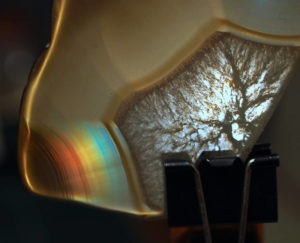
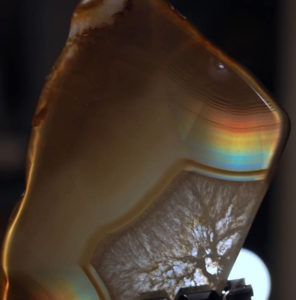
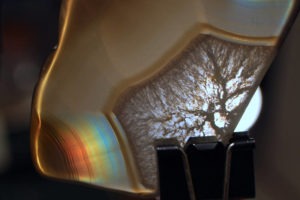
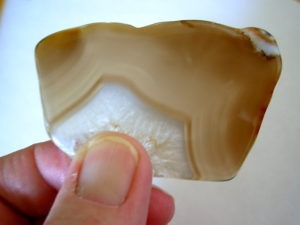
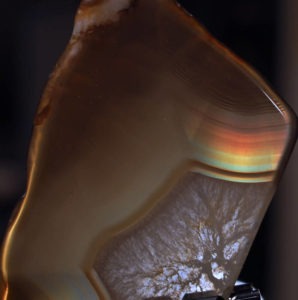
THIS STONE is 1.75" x 1.25" x .1 to .125" in size. The band of iris is 7/16 " wide and crosses the stone except for the spot on the right. It is an upper bright lower vivid level of iris in the rarer brown bodied agate and is a nice specimen for the collector or cutter. Horse Mountain Iris Agate rivals or beats the best from anywhere in the world.

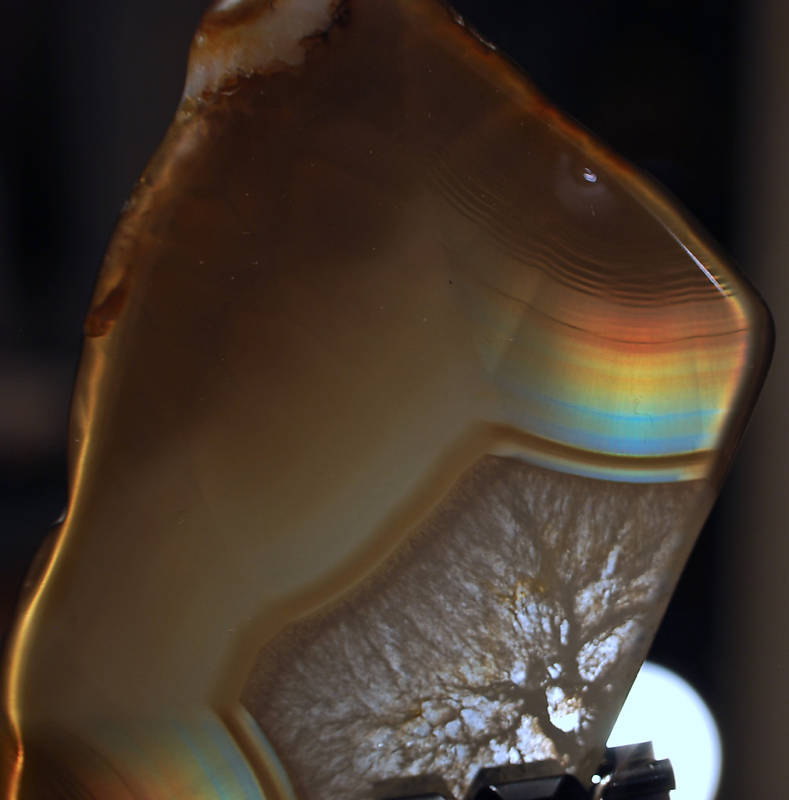
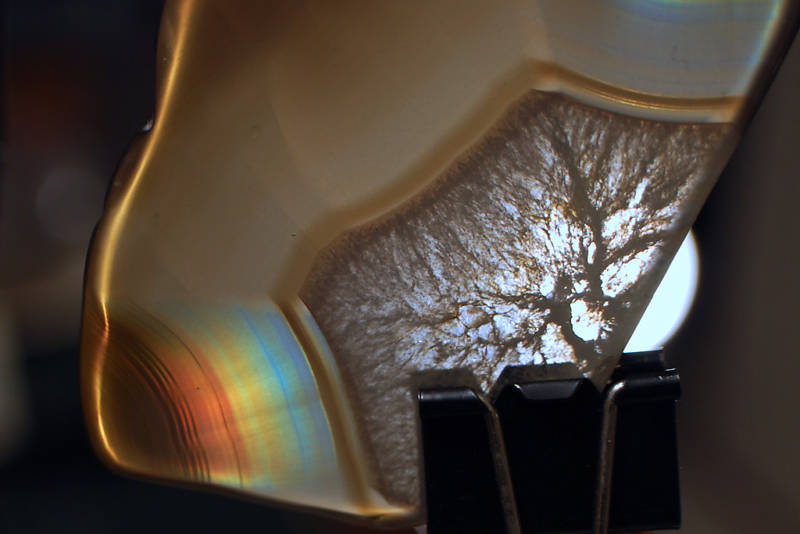
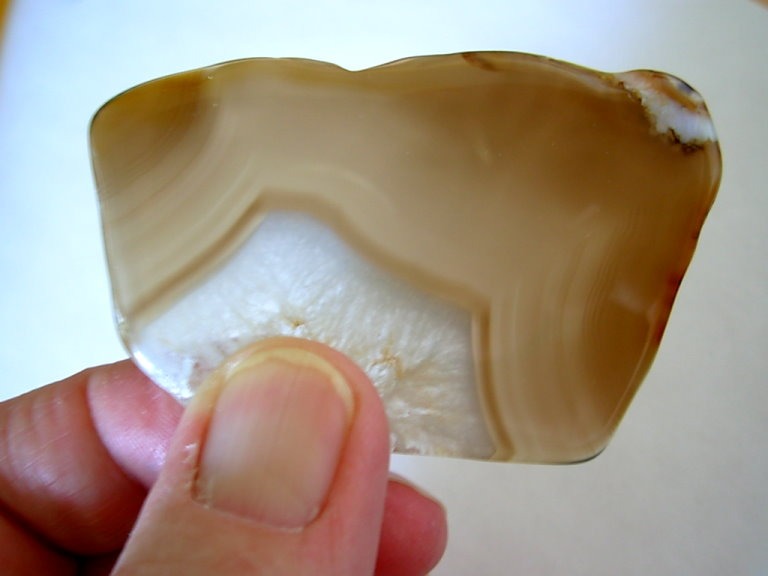
Item# HMIA0510S00011
Polished Horse Mountain Iris Agate
HORSE MOUNTAIN IRIS AGATE...WITH TURTLEBACK! ONE OF AMERICAS FINEST HIGH GRADE IRIS AGATES
This material is from closed sites in middle Tennessee and while relatively unknown today to all but some old time rock hounds, this is some of the WORLDS BEST. There are two basic types of Iris from Horse Mountain and the first is the clear to whiteish material common to all iris sites. The second is unique for U.S. material as far as we know and has a brown body color to the agate.
Other sites may have blobs of color or dendrites but not the brown body color. Mentioned in Judith Zeitners " APPALACHIAN MINERAL & GEM TRAILS " in 1968 this material has been depleted long ago. This stone is backlit with a 40w incandescent bulb for pictures and the camera is a Nikon D40X using an 18-55 Nikon lens and usually used with a Mercury Optics 52mm 0.45x macro lens. While viewing these pictures (taken by Rockman 836 Lapidary) please remember that the camera shows greater detail of the stone than is generally visible with the naked eye.
Please note; although we are lucky enough to have a few pieces of Horse Mountain Iris Agate to sell …do not think that this is common material…it is not. When this stock is gone there is no more available.
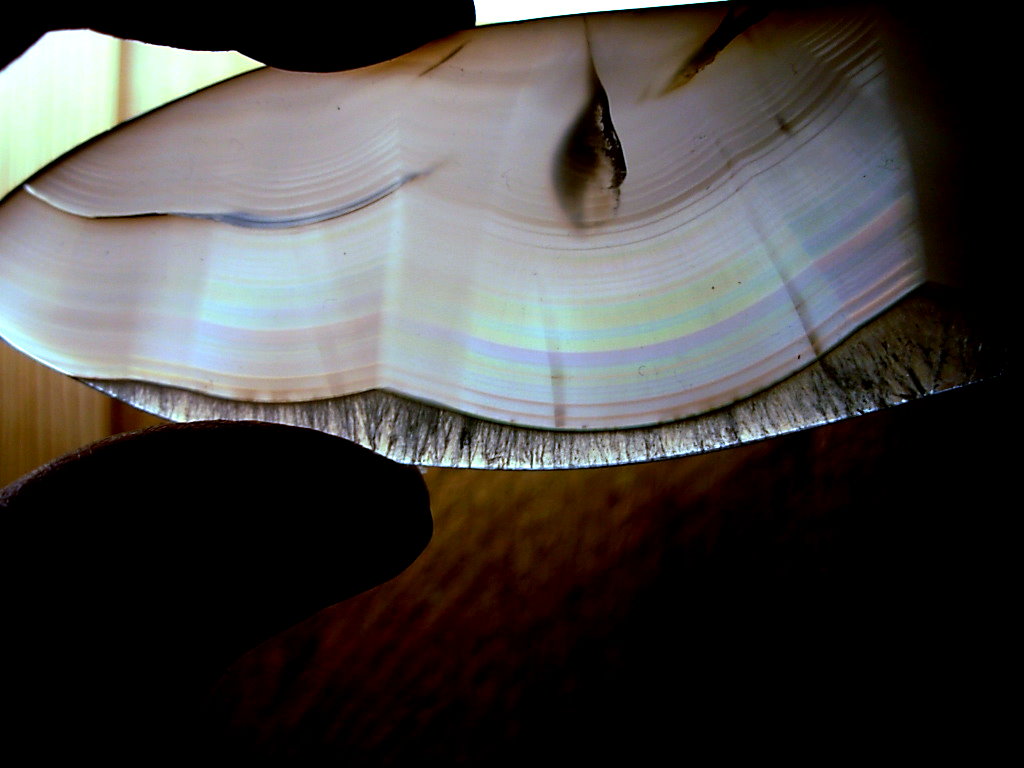
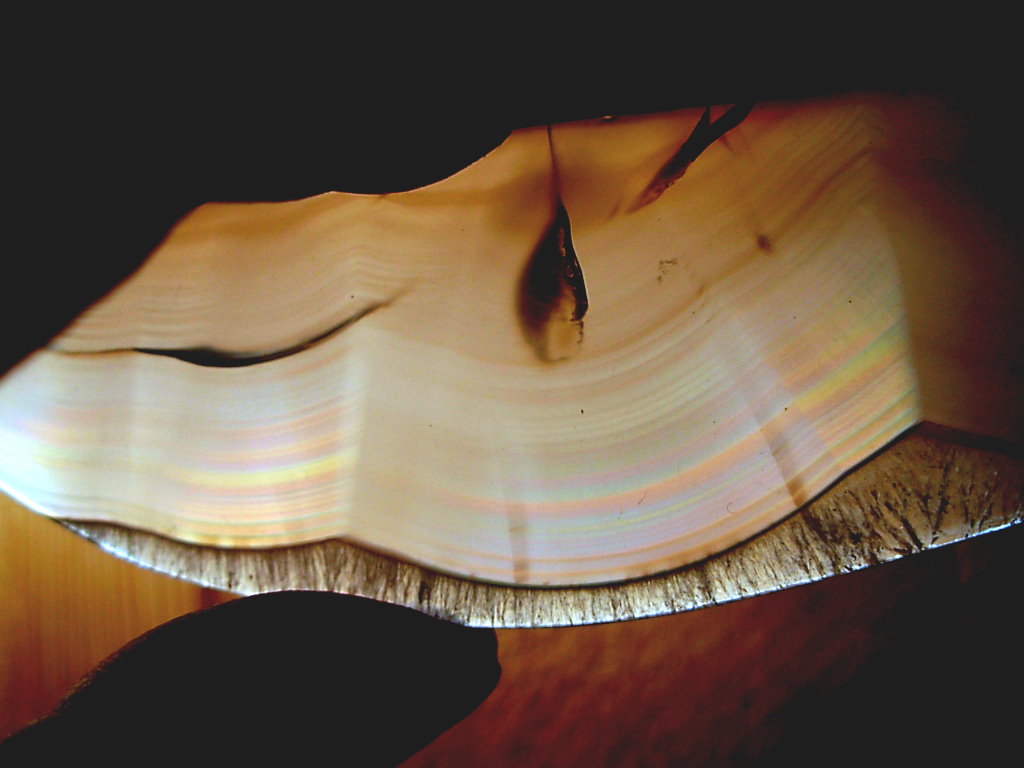
THIS STONE is 2.5" x 1.5" x .10" in size. The band of iris is 1/2" wide. The best spot on the iris are shown at the top and the bottom of the stone. The band actualy does go around the center of the stone but you will have to tilt at a severe angle to get it. The level of iris is medium bright and the colors are pretty much what you see. This is an interesting specimen due to the combination of features. It is the rarer brown body, it is of course iris and it also has a fine display of turtleback. All in all an unusual larger stone even though the iris is not real bright.
Item# HMIA112110962
Large Polished Horse Mountain Iris Agate
$395.00
HORSE MOUNTAIN IRIS AGATE...ONE OF AMERICAS FINEST HIGH GRADE IRIS AGATES
This material is from closed sites in middle Tennessee and while relatively unknown today to all but some old time rock hounds, this is some of the WORLDS BEST. There are two basic types of Iris from Horse Mountain and the first is the clear to whiteish material common to all iris sites. The second is unique for U.S. material as far as we know and has a brown body color to the agate. Other sites may have blobs of color or dendrites but not the brown body color.
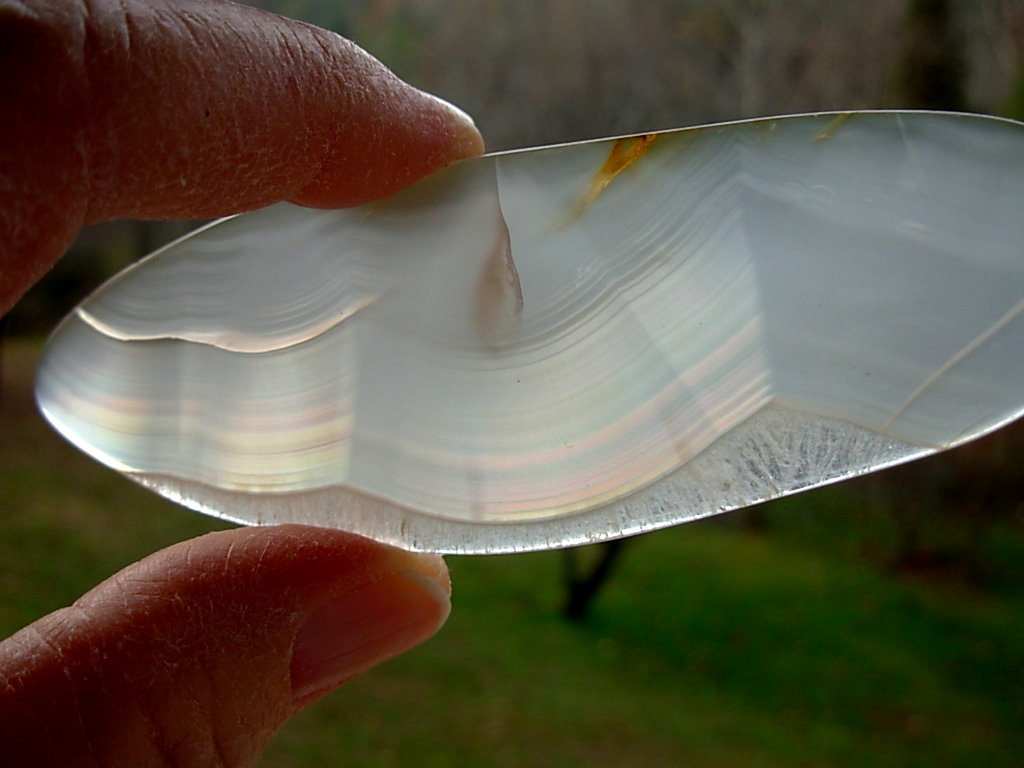
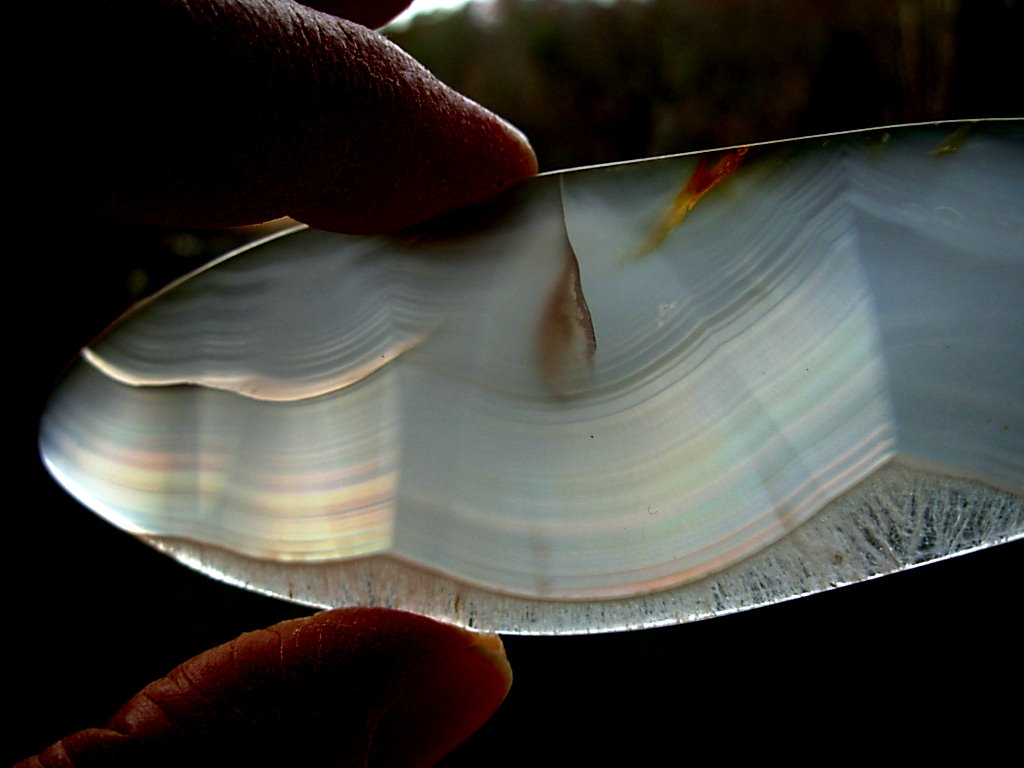
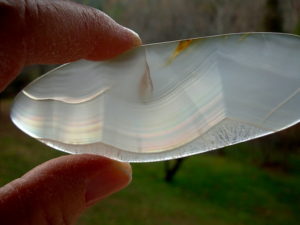
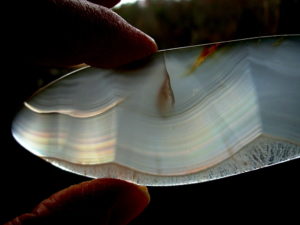
Mentioned in Judith Zeitners " APPALACHIAN MINERAL & GEM TRAILS " in 1968 this material has been depleted long ago. This stone is backlit with natural sunlight on sunny day, natural sunlight on a cloudy day and a 15W LED light fixture (over my desk) for pictures and the camera is a Nikon Coolpix L1 digital camera in the macro mode. While viewing these pictures please remember that the camera may show greater detail of the stone than is generally visible with the naked eye.
Please note; although we are lucky enough to find this rare piece of Horse Mountain Iris Agate to sell …do not think that this is common material…it is not. This is the first piece of this material we have been able to find in the last 12 years.
This nearly water clear stone is 4.46 x 1.45 x 0.22 inches (113.4 x 36.8 x 5.6mm) in size. The banding is .475" (12mm) wide and is what I would call medium bright at best. The pictures show the extent and color of the iris.
40W incandescent Backlit Photos tken by Rockman 386