
Rutilated Quartz

Rutilated Quartz 1
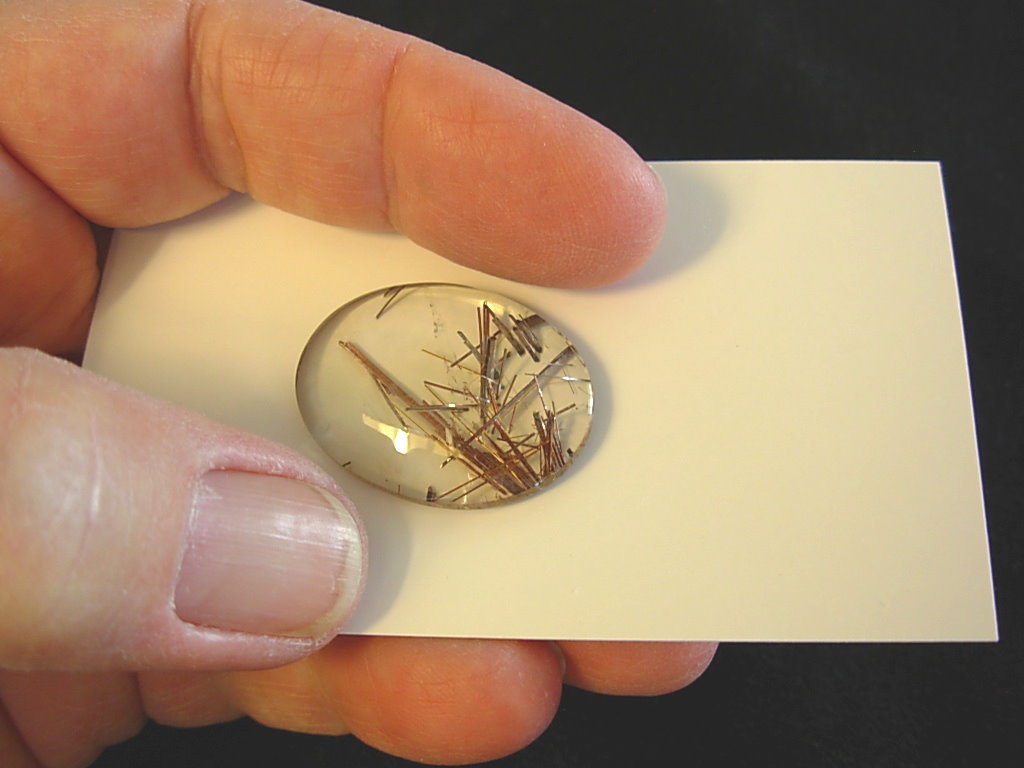
Rutilated Quartz 2
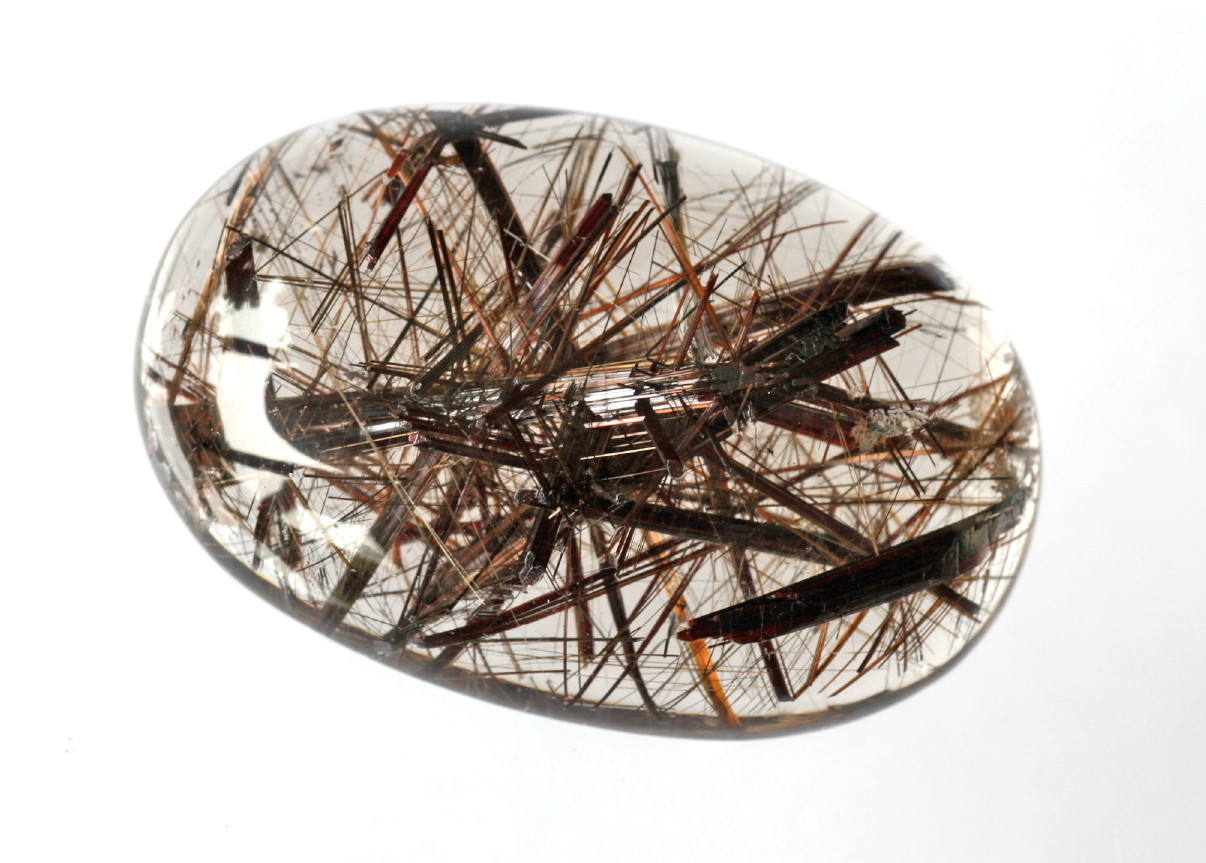
Rutilated Quartz 3
Rutilated quartz is a macro crystalline variety of the mineral Quartz. Quartz is the most abundant single mineral on earth. It makes up about 12% of the earth's crust, occurring in a wide variety of igneous, metamorphic and sedimentary rocks.
Quartz varieties are divided into two groups based on the size of the individual grains or crystals;
macro crystalline is quartz in which individual crystals are easily seen with the naked eye
crypto crystalline is quartz in which the individual crystals are too small to be seen without the use of magnification.
Some of the macro crystalline quartz varieties are: Amethyst, Ametrine, Cat's-eye Quartz, Citrine, Phantom Quartz, Rock Crystal, Rose Quartz, Rutilated Quartz and Smoky Quartz. Blue Aventurine Quartz and Green Aventurine Quartz are actually quartzite (a rock, not a mineral) composed essentially of interlocking macro crystalline quartz grains with grains of other color imparting minerals.
The crypto crystalline varieties of quartz may be separated into two types; fibrous and micro granular. Chalcedony is the general term applied to the fibrous crypto crystalline varieties. Agate is an example of a fibrous crypto crystalline banded chalcedony variety of quartz. Carnelian, Chrysoprase and bloodstone are other chalcedony varieties. Chert is the general term applied to the granular crypto crystalline varieties of quartz, of which flint and Jasper are examples.
Many different minerals can form as inclusions within quartz. One of the most important varieties of included quartz for gem use is Rutilated quartz. Rutilated quartz usually occurs as Rutilated rock crystal, Rutilated smoky quartz or Rutilated milky quartz.
Rutilated quartz forms in quartz veins, usually with milky quartz bordering the vein with quartz crystals growing in toward the center, growing around and enveloping the Rutile crystals traversing the vein. Natural radiation can cause Rutilated crystal to become a brown to gray color, known as Rutilated smoky quartz.
Rutilated quartz is recognized by the Rutile crystals passing through the quartz. Rutile is one of three polymorph's of Titanium Dioxide; Rutile, Anatase, and Brookite. Rutile is the most common natural form of Titanium Dioxide. Rutile color is black or reddish brown in large thick crystals or golden yellow or rusty yellow as inclusions or in thin crystals.
The name is from the Latin "rutilus", which means "golden-red". Natural Rutile is important in mineralogy because of its presence as fine inclusions. It forms prismatic crystals that can be thin as hairs or forming larger needle like crystals in other minerals. If the needles are very fine, they result in the phenomena known as “Asterism” and “Chatoyancy”. In fact, microscopic Rutile needles are responsible for the stars (Asterism) in star sapphires.
Rutilated quartz is also known as “Venus hair stone”, “Cupid's darts” and “Fleches d'amour”.
Perfect polished specimens are difficult to obtain due to the hardness difference between Quartz (which is 7 on the Mohs scale), and Rutile (which is 6 on the Mohs scale). Most Polished Rutilated quartz will have small pits or fractures due to this characteristic.
Recently, manufactured Rutilated quartz, in such forms as spheres, freeforms and pendants, has been imported to the mineral market. Reputable sellers will always identify where the natural specimen comes from, or specifically state the item is a manufactured specimen. If you are not sure, ask before buying.
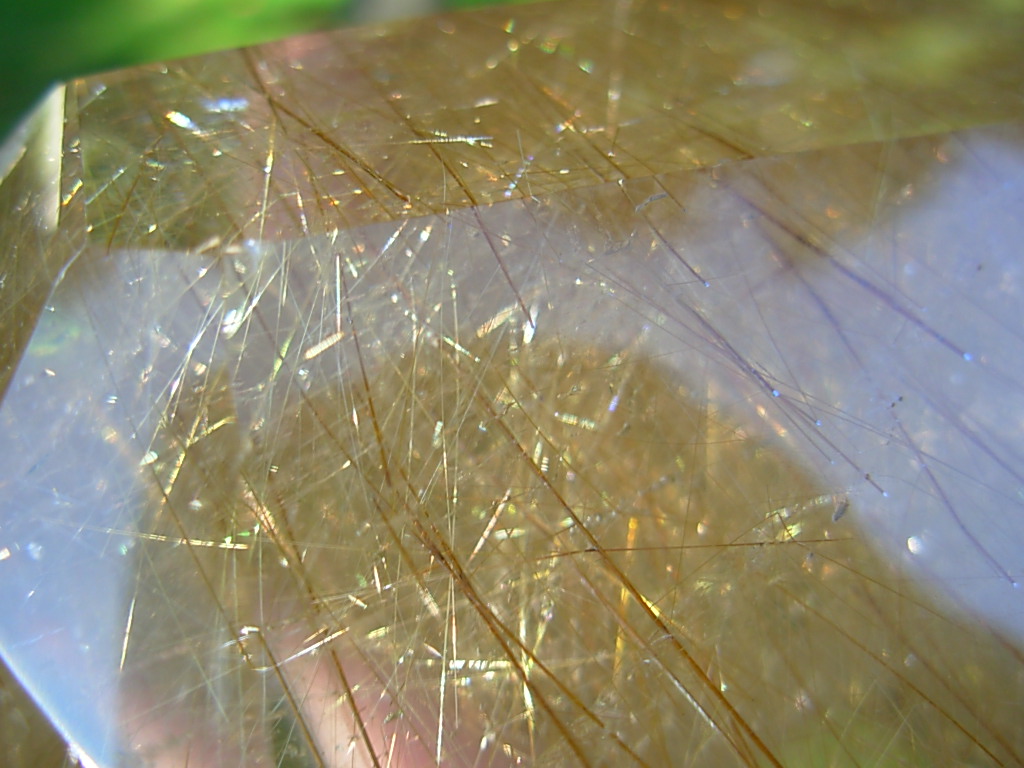
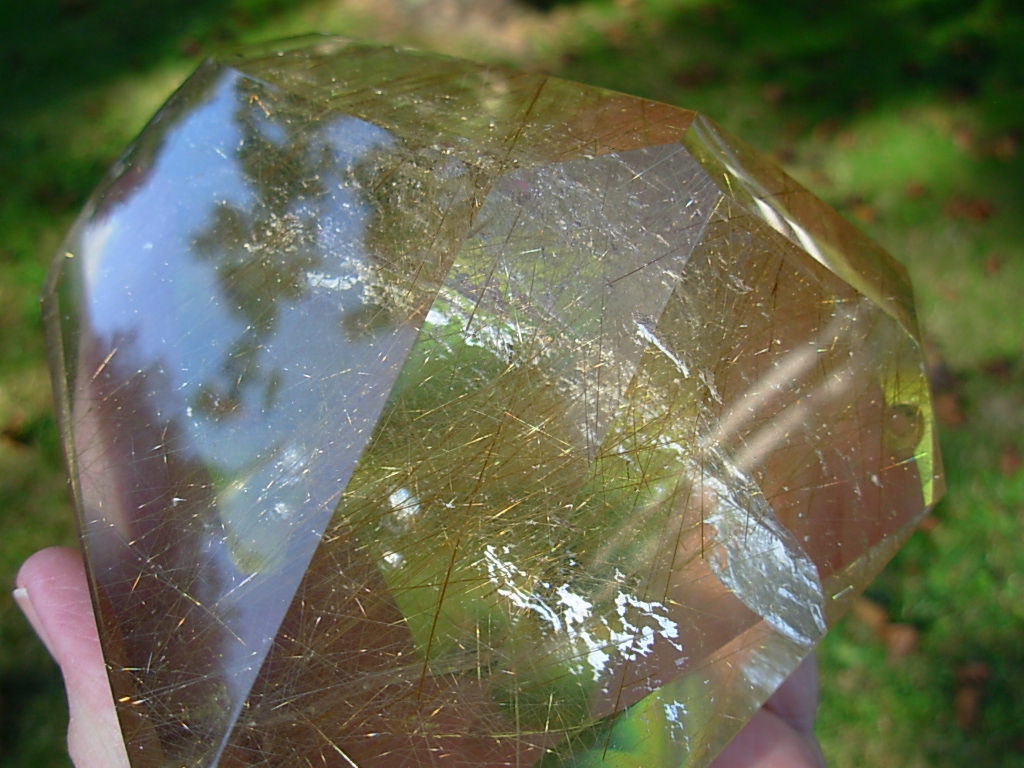
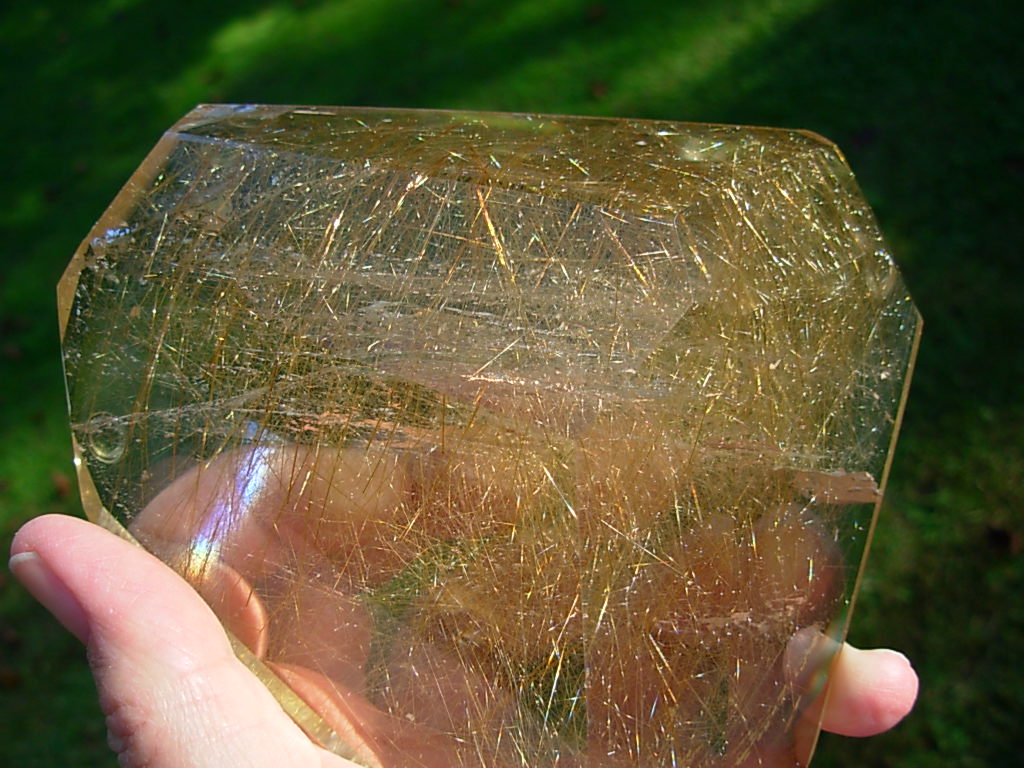
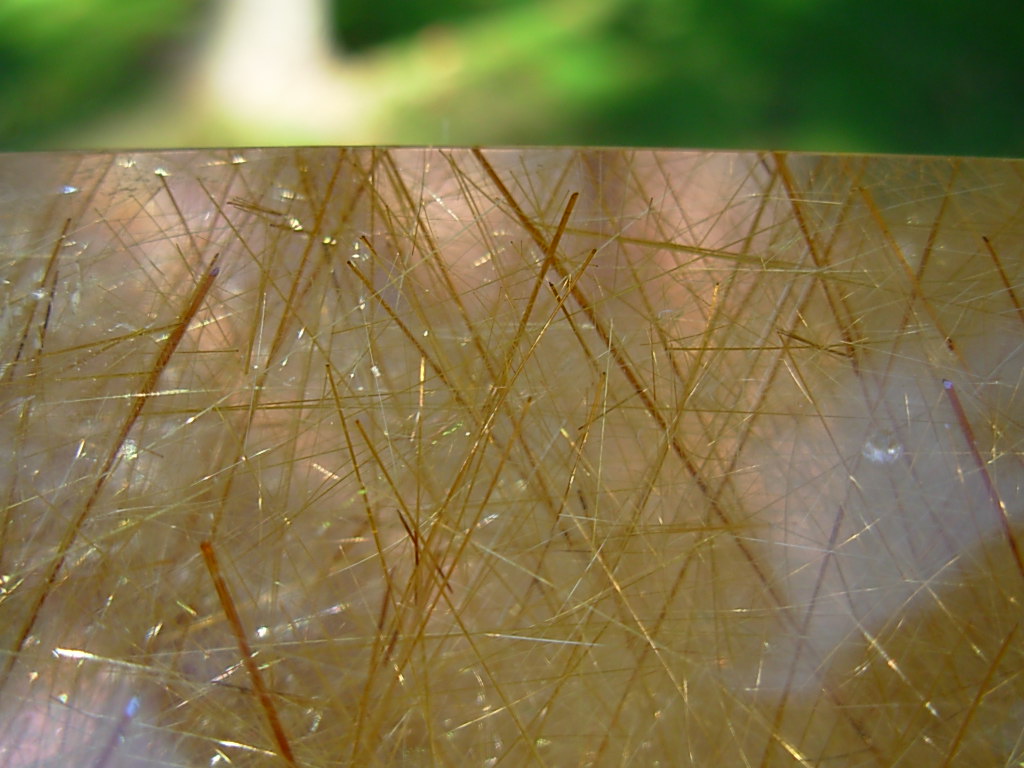
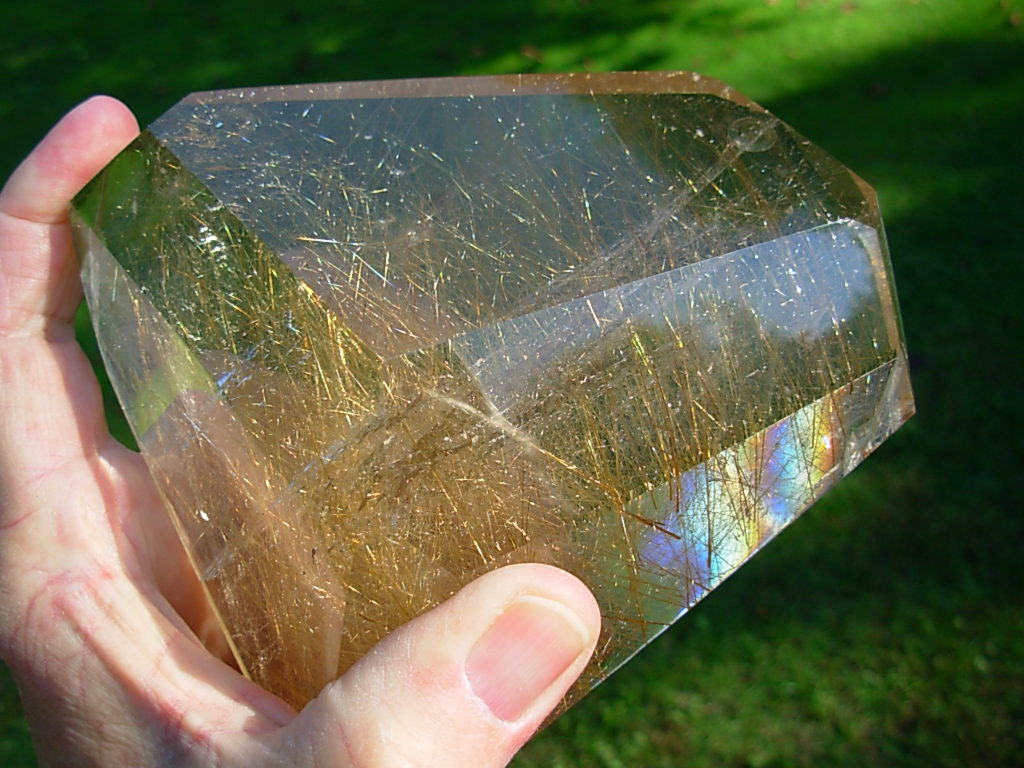
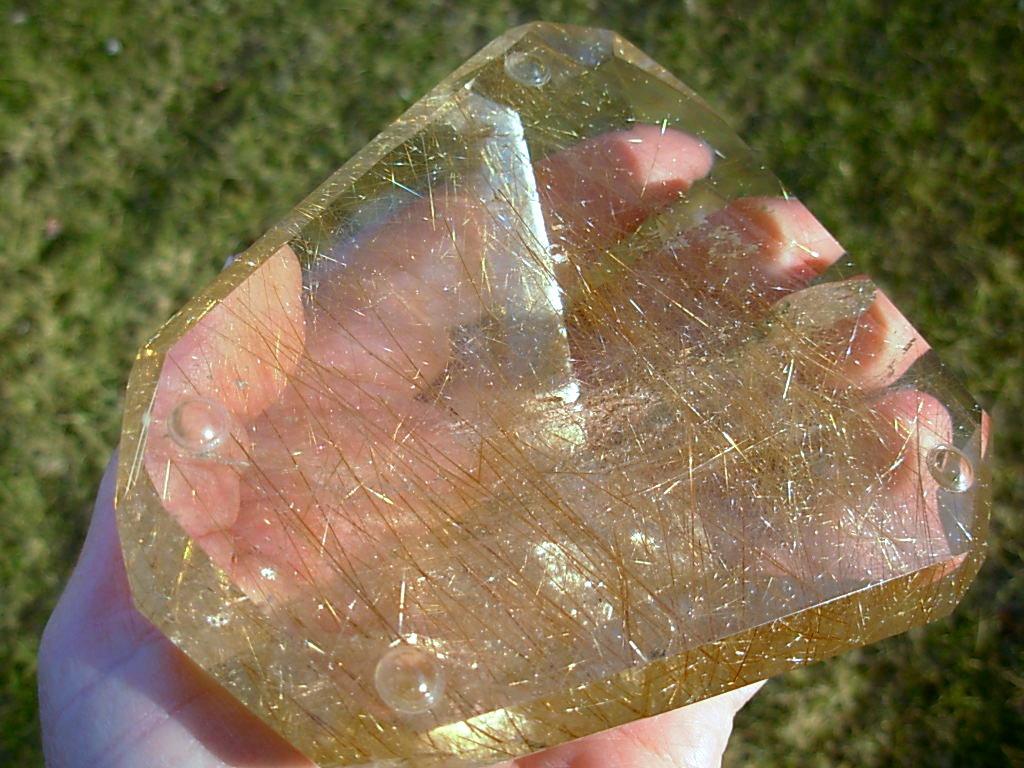
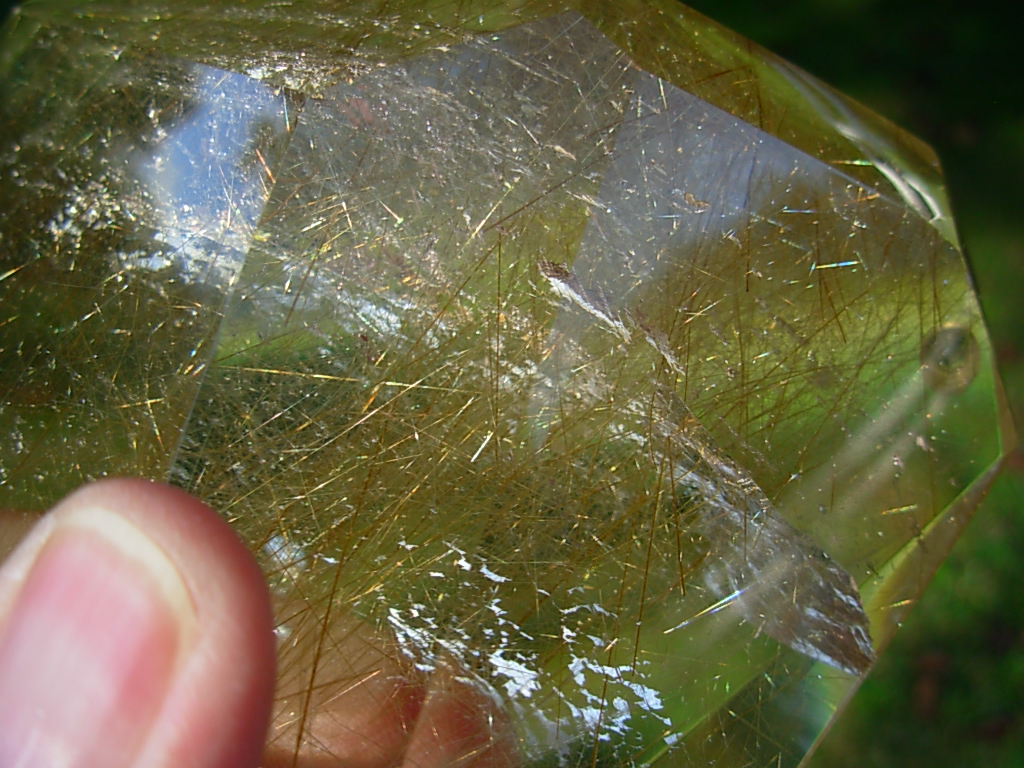
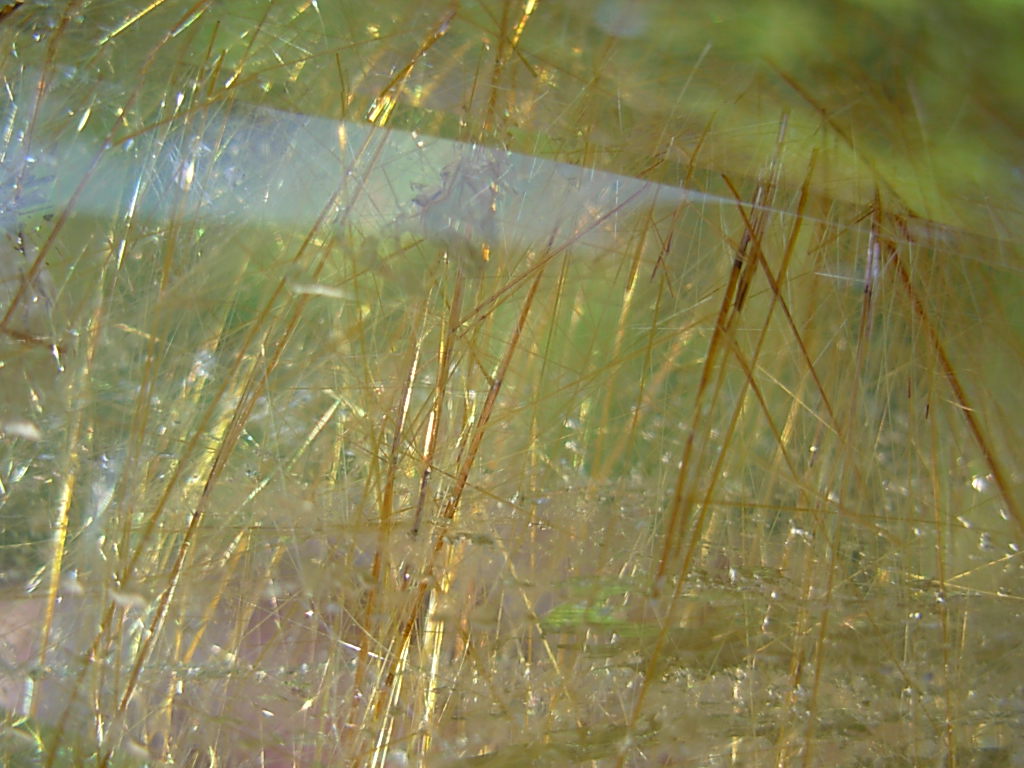
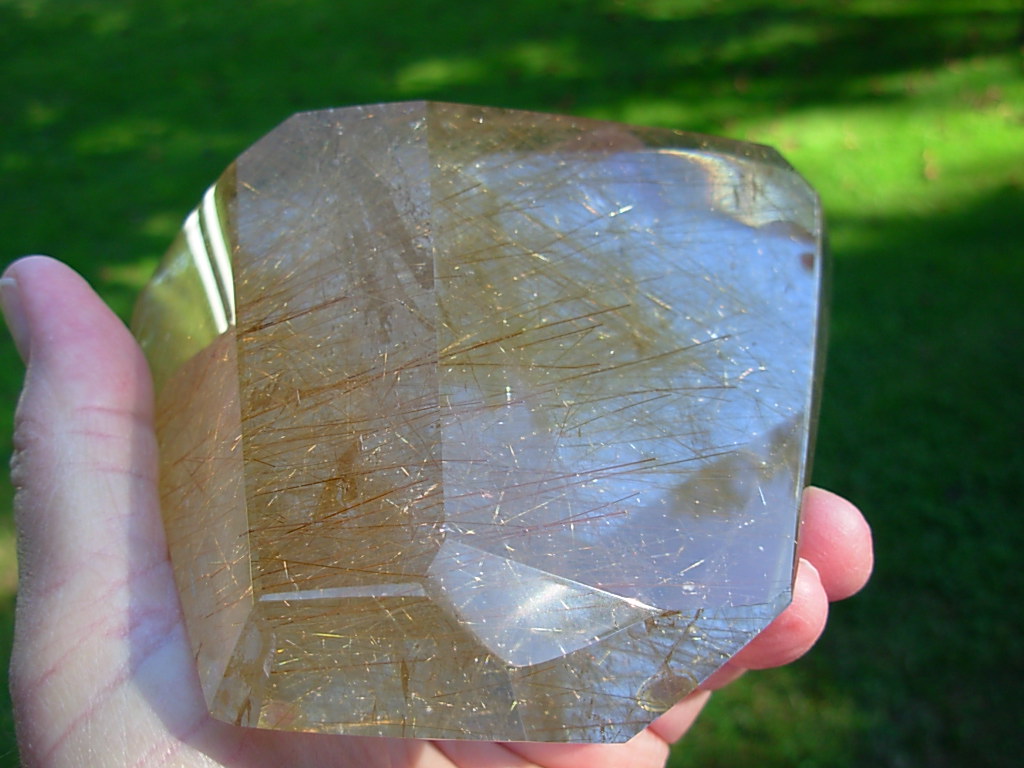
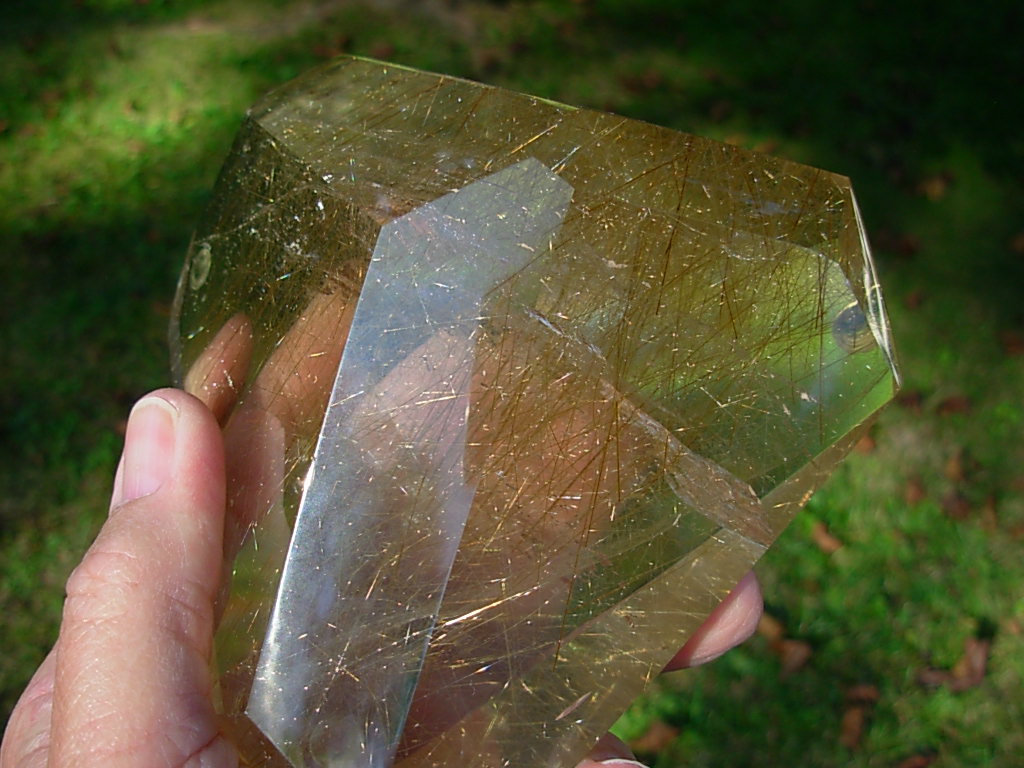
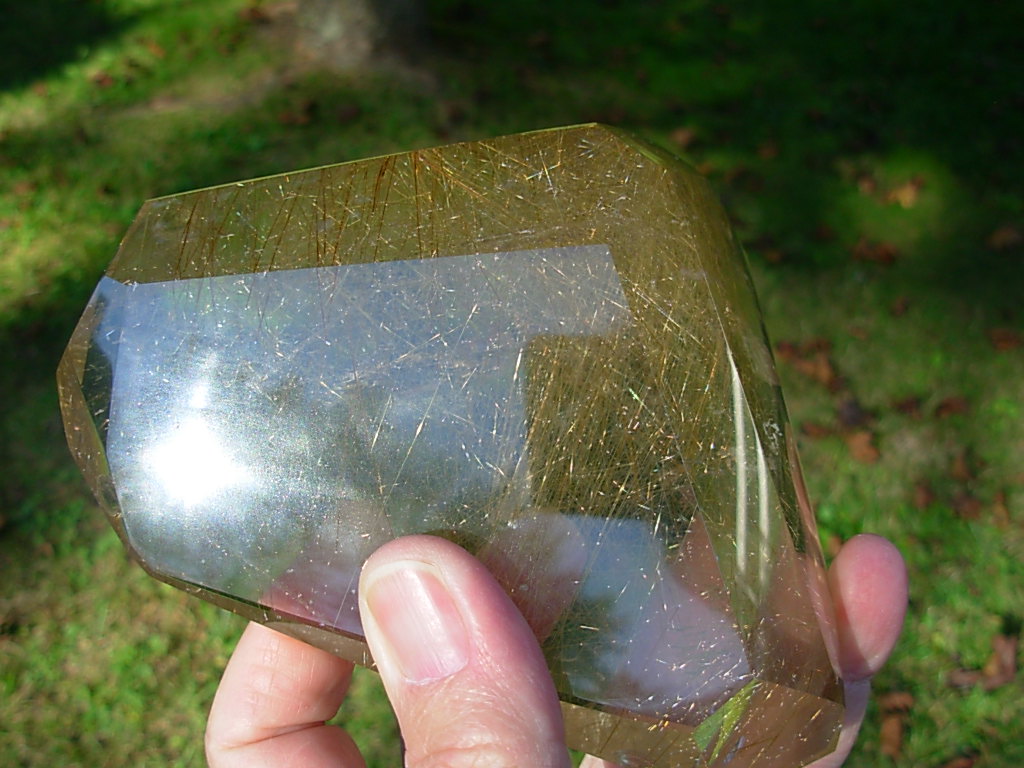
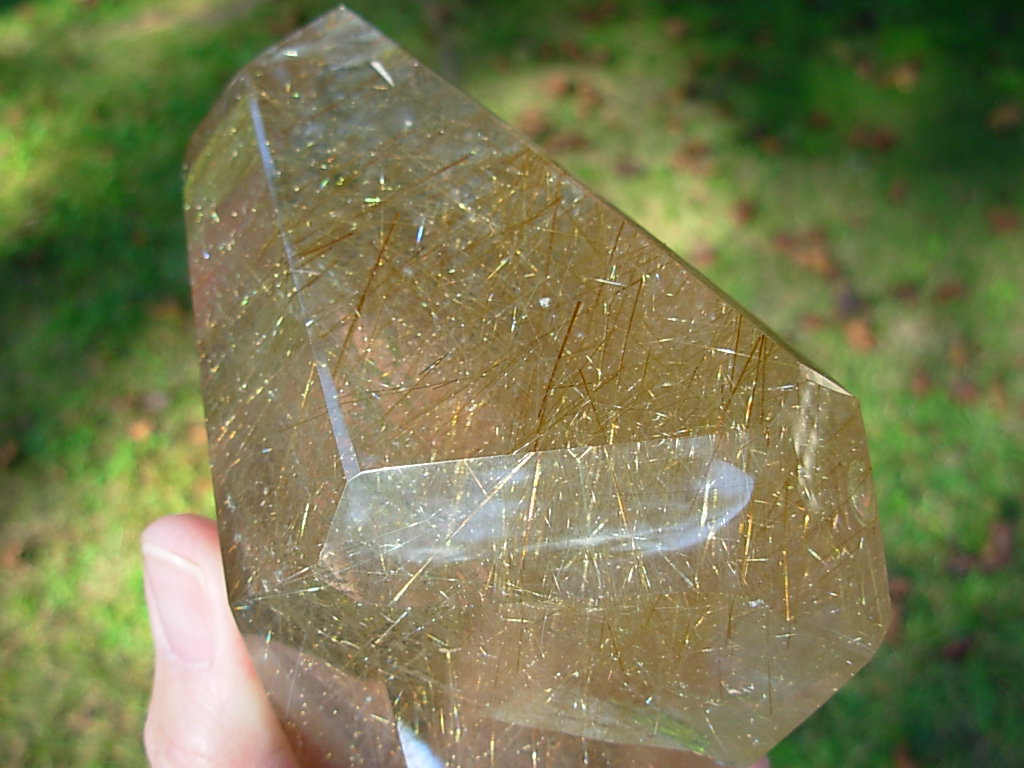
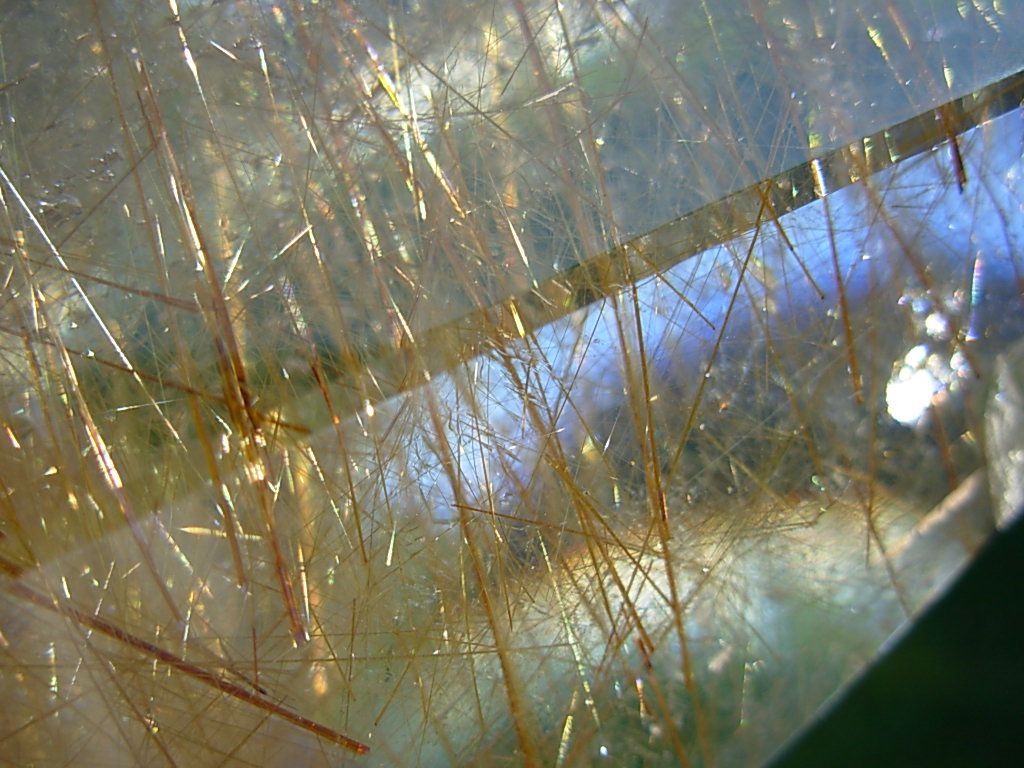
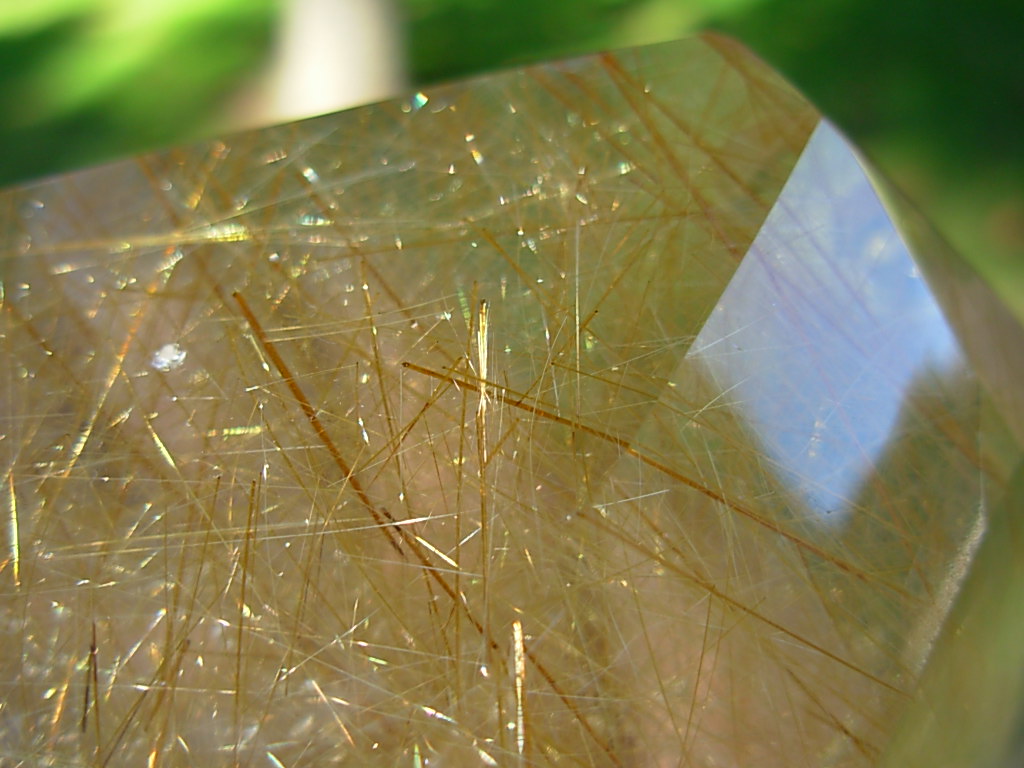
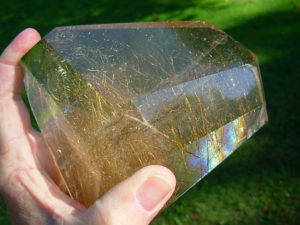
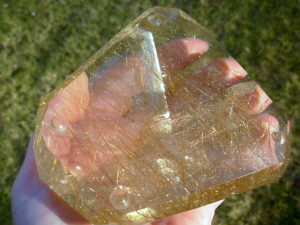
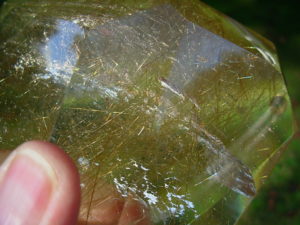
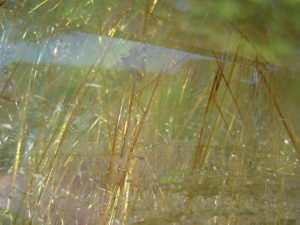
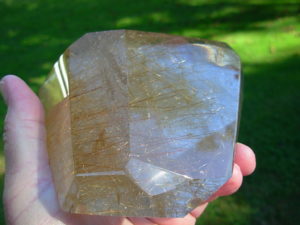
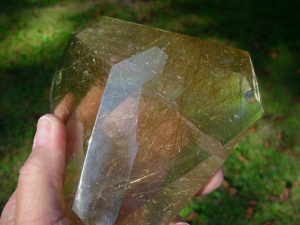
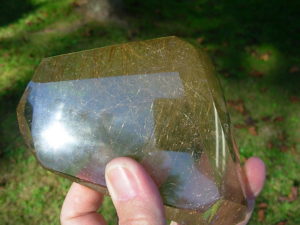
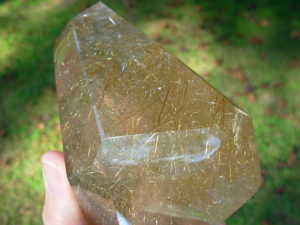
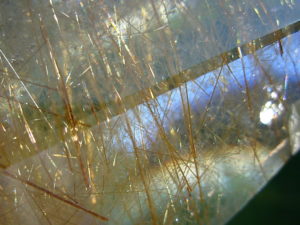
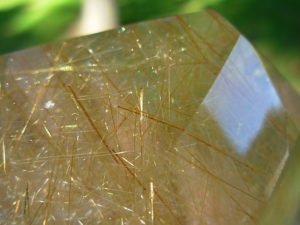
Item #RQB0214S429C07031
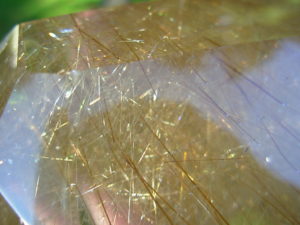
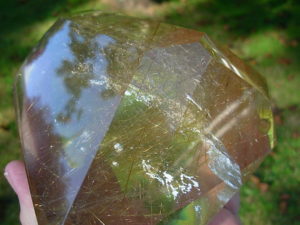
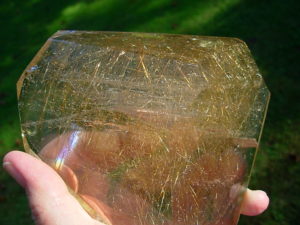
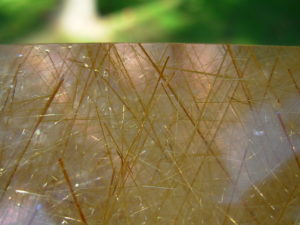
Polished Natural Rutilated Smoky Quartz Freeform from Brazil

Exceptional Specimen!
Ground and polished from a natural Rutilated quartz crystal unearthed in Diamantina, Minas Gerais, Brazil. This rare quality XL polished crystal of natural Rutilated quartz has very fine transparency with slender golden rutile crystals “floating” in the light smoky quartz crystal. There are several natural fractures which produce an amazing reflective pattern within the piece.
This is the nicest piece of Rutilated quartz we have ever found. This specimen was obtained from a Brazilian mine owner at the 2000 Tucson Show, It is from our Personal Collection and it has 4 clear cabinet bumpers stuck on as feet on the bottom for desk or glass shelf display (these are easily removable without damaging the piece).
This specimen weighs 32oz or 2 lbs (908g) and measures 5.8 x 5.1 x 2 inches (14.7 x 13 x 5.2cm)
We were able to obtain some old stock (1960's vintage) rutilated quartz from Brazil. Specimens for sale are listed on Thumbnail page...they are extremely difficult to work with as the natural inclusions penetrate the quartz exterior, and the quartz surfaces have small vugs which do not like to polish out ...but...we are listing some pieces "as is"...
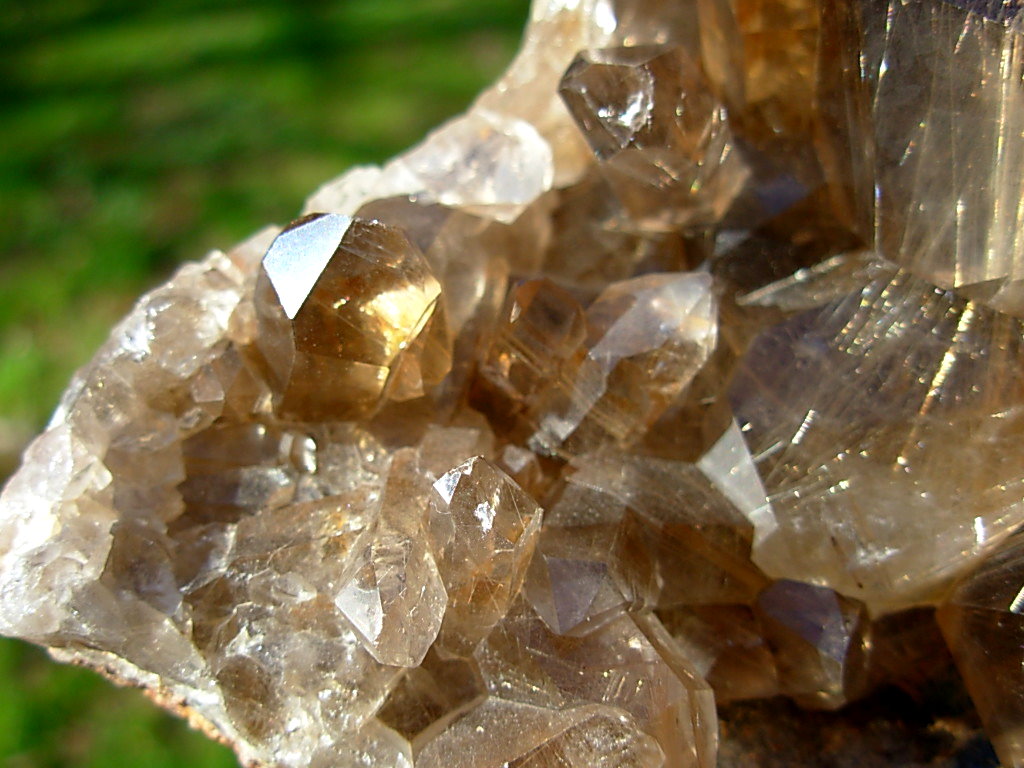
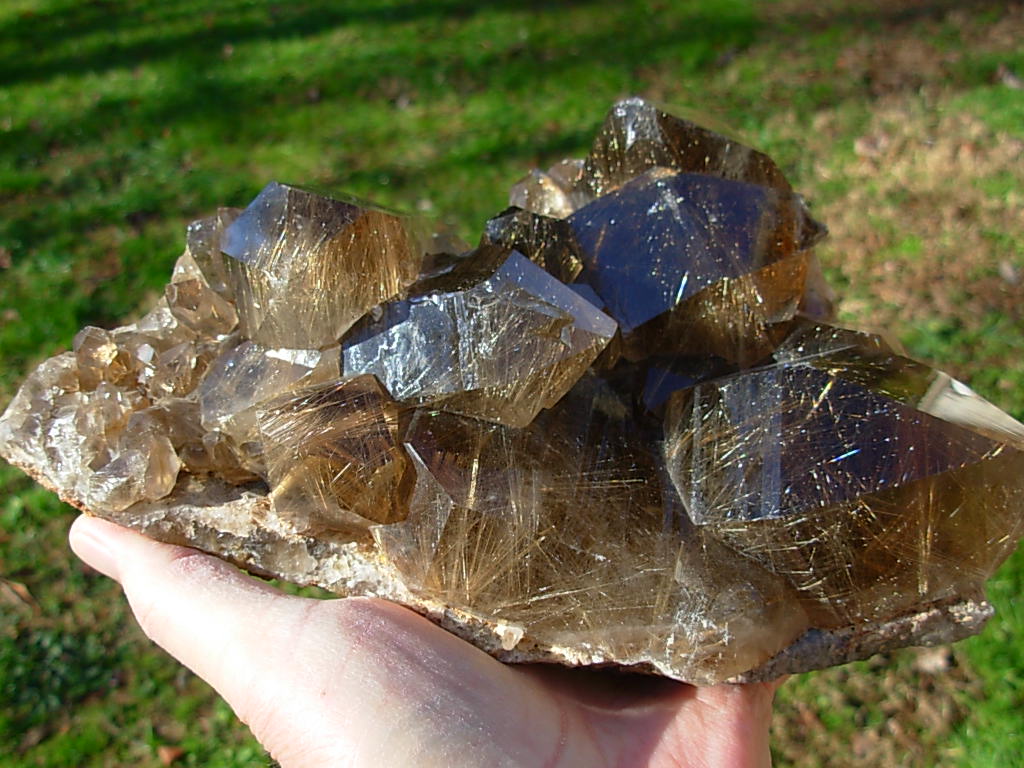

Item #RQB0116S450C99003
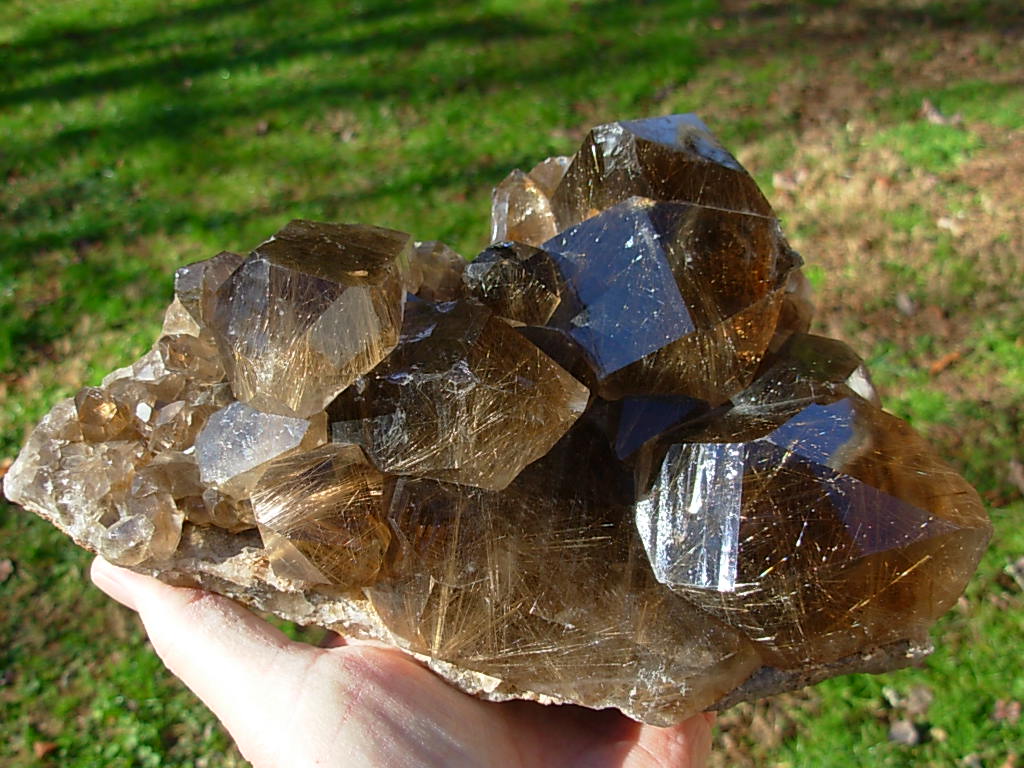
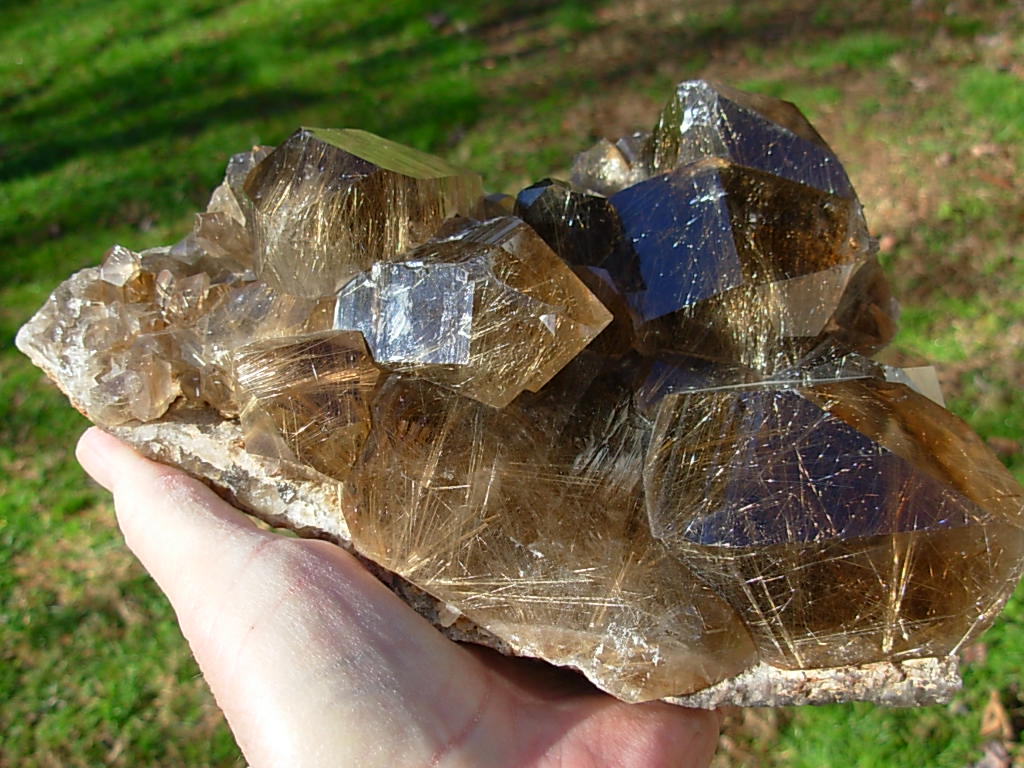
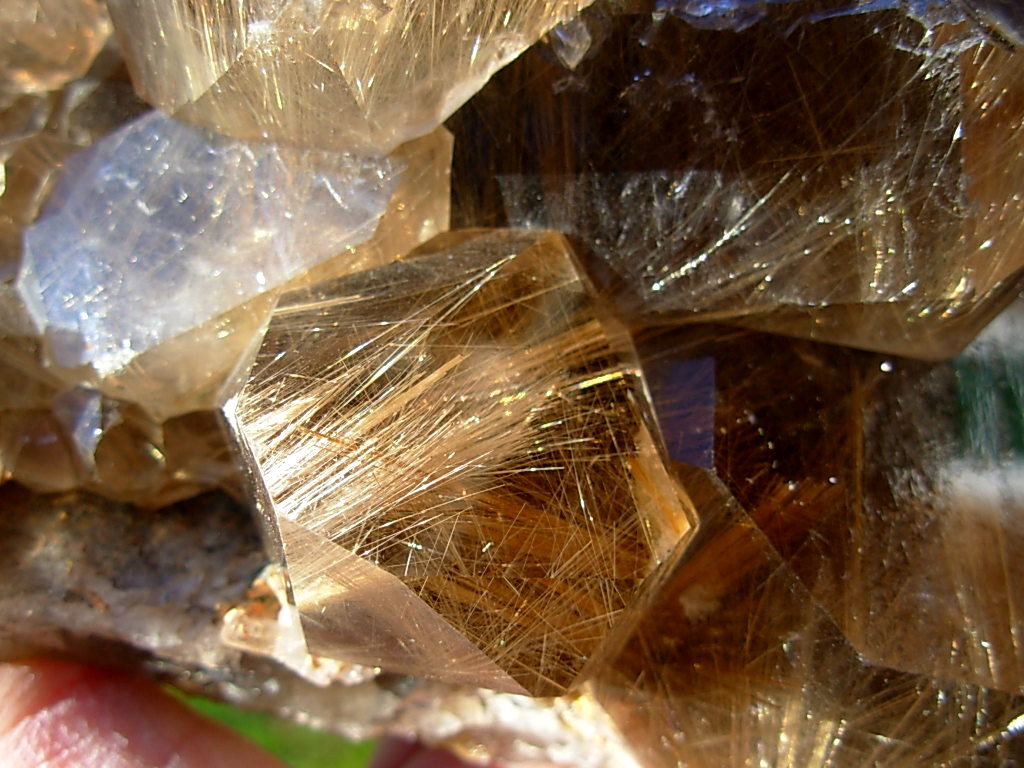
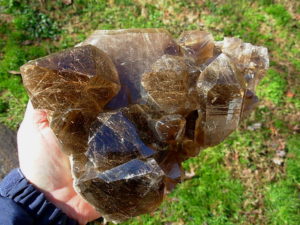
Natural Smoky Quartz Points with Golden Rutile Inclusions from Brazil
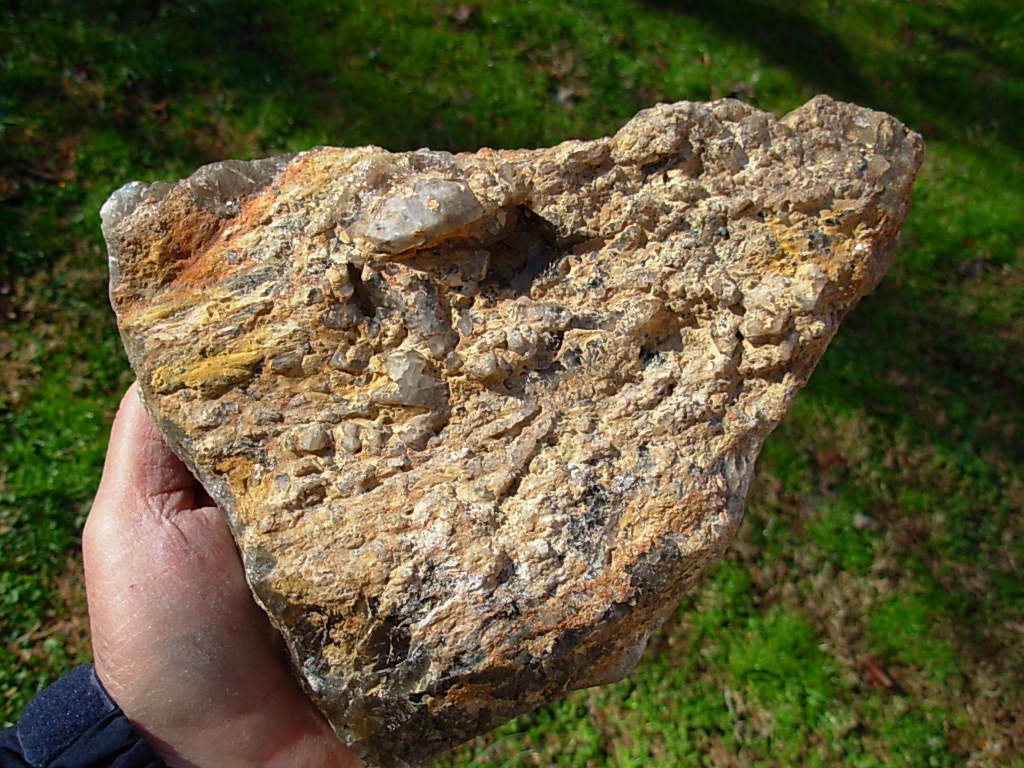
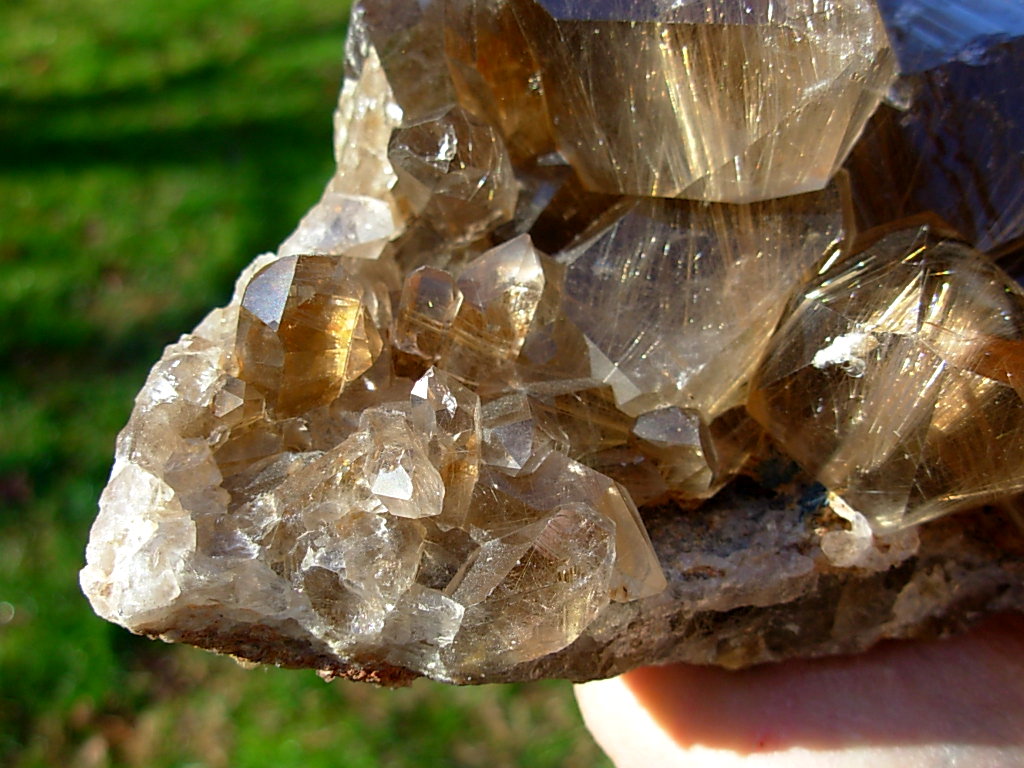
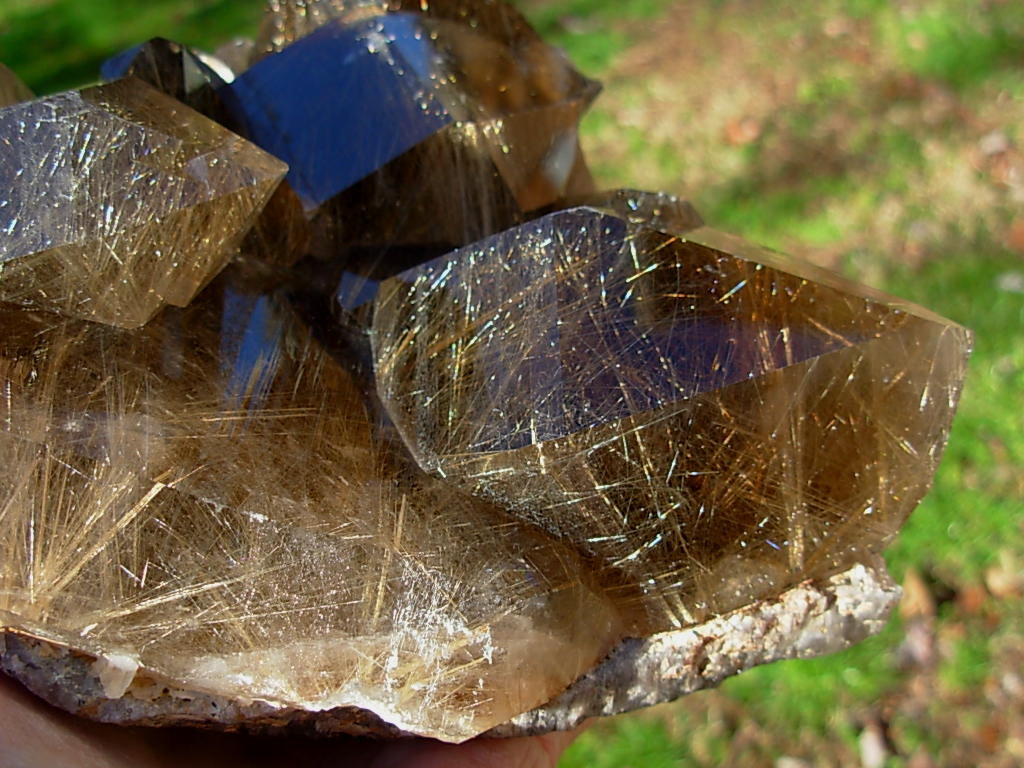
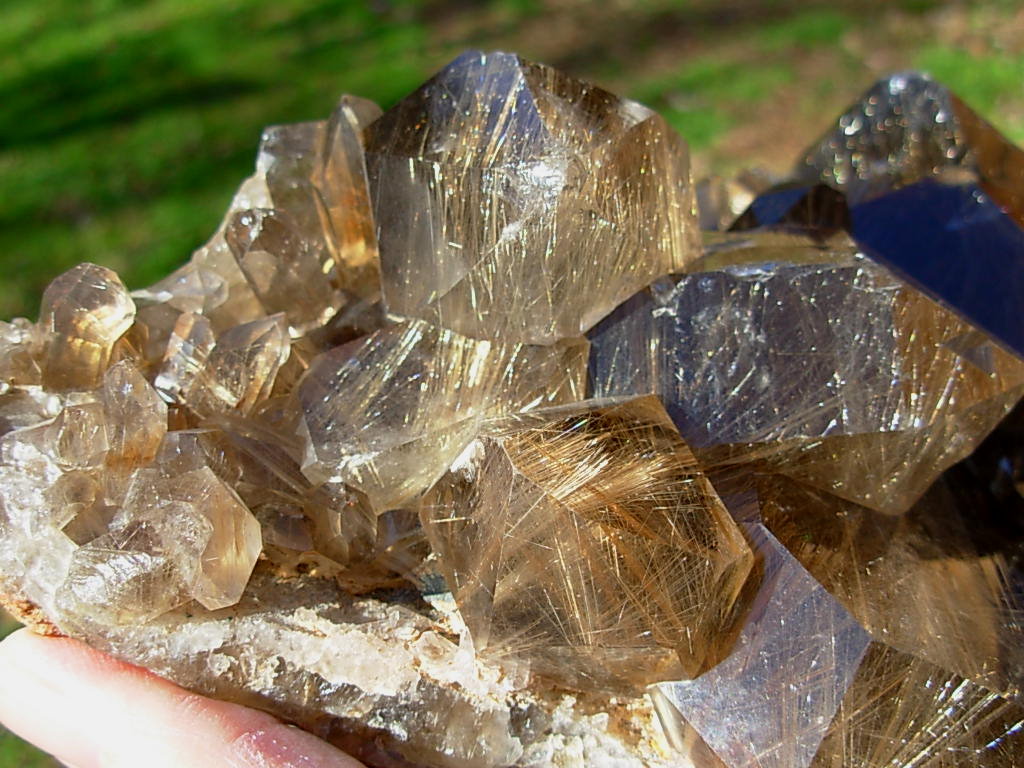
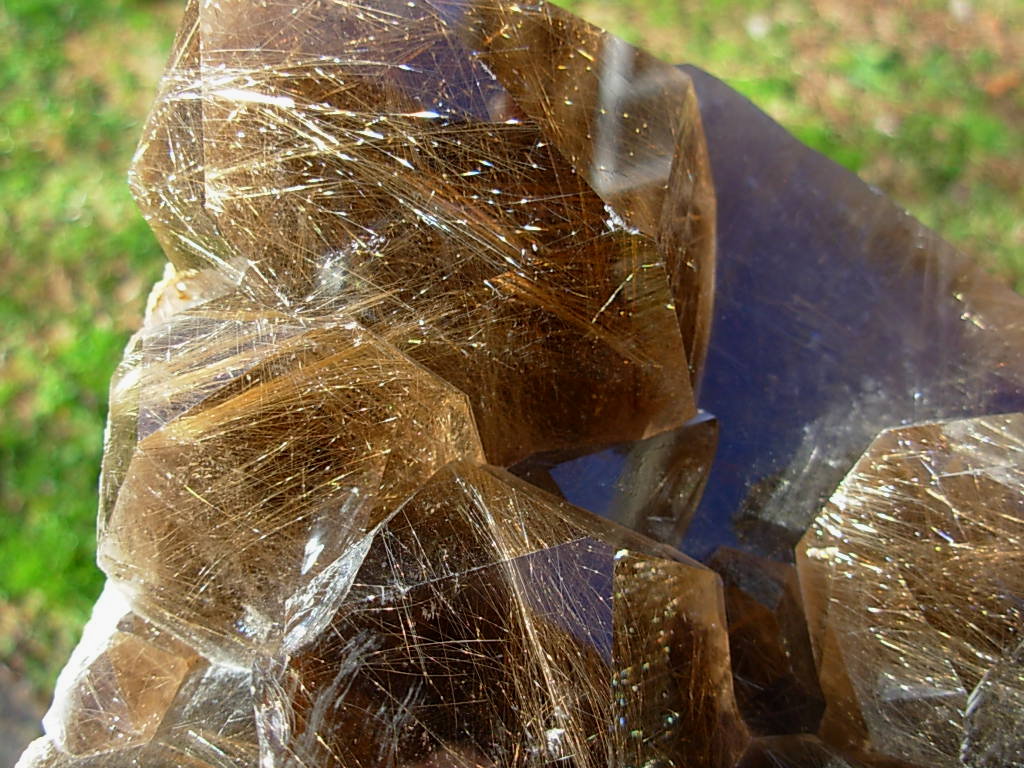
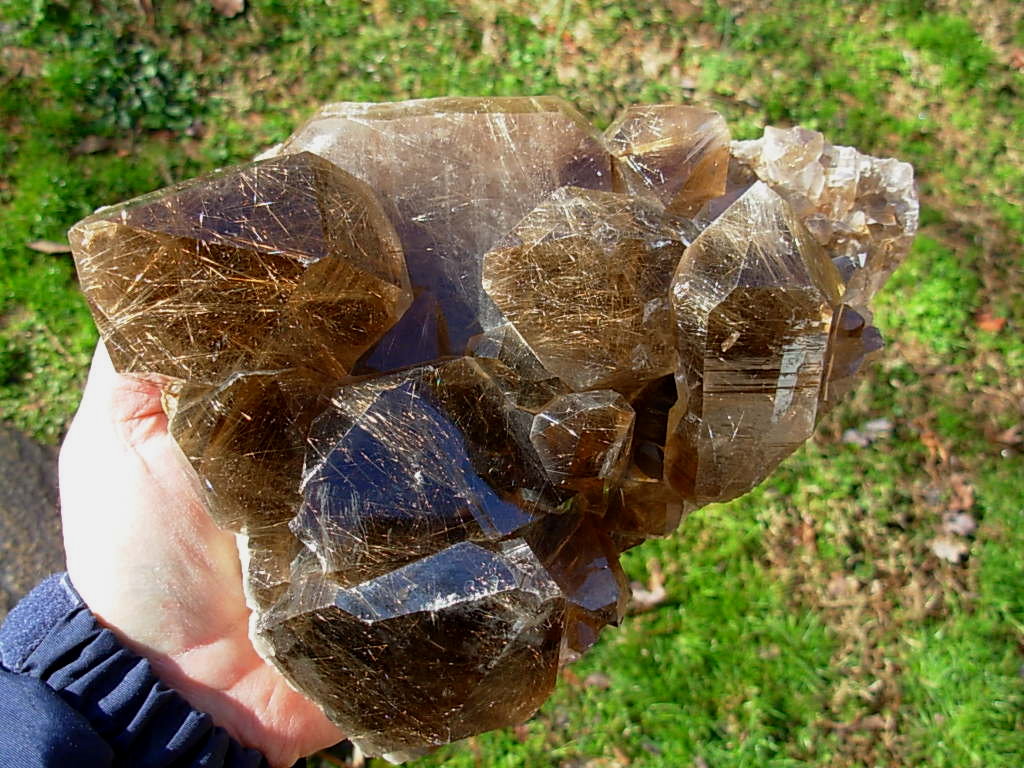
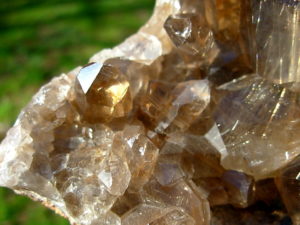
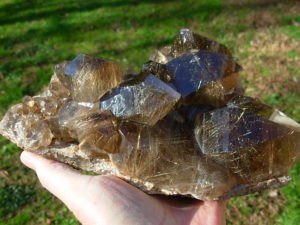
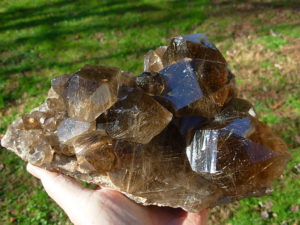
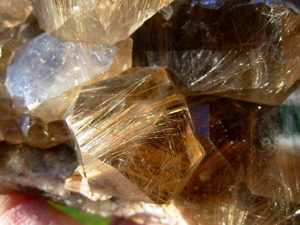
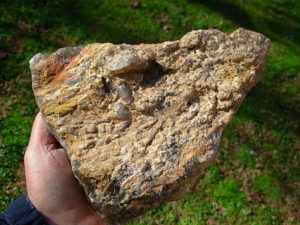
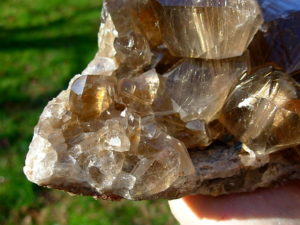
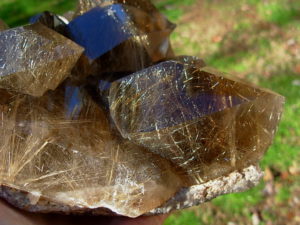
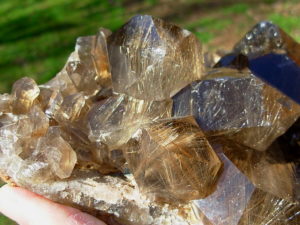
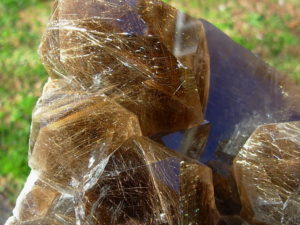
Natural Rutilated Smoky Quartz crystal points on a large plate from Brazil. This Old Stock rare quality XL plate of Smoky Quartz points with Golden Rutile inclusions was procured from a mineral dealer who purchased the entire Junior McKinney Gem Shop (located in Spruce Pine, NC) inventory a few years after Juniors death. Many of Junior McKinney's specimens are on display in North Carolina Museums. This specimen has beautiful rutile inclusions on this one of a kind Large point plate. There are 10 large points and at least 10 more smaller points. There are chips on most of the points, but this is still an amazing display of natural smoky rutilated quartz! It is from our Personal Collection and it has been an individual display specimen on a cabinet top where natural sunlight highlights the golden rutile needles.
This specimen weighs 88.7oz or 5.5 lbs (2.516kg) and measures 8.22 x 6.18 x 2.99 inches (20.8 x 15.6 x 7.6cm)

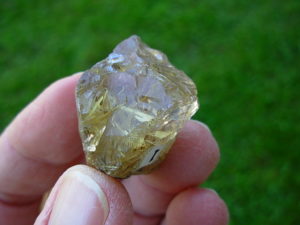
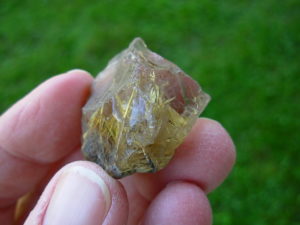
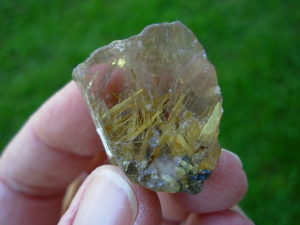
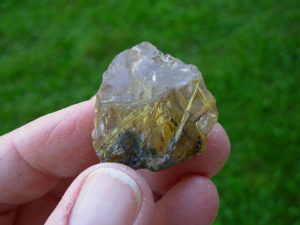
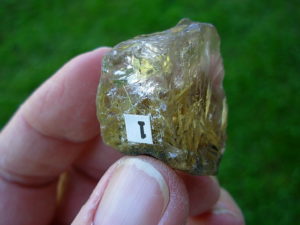
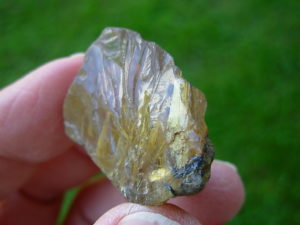
Item #RQB0214S39C7031
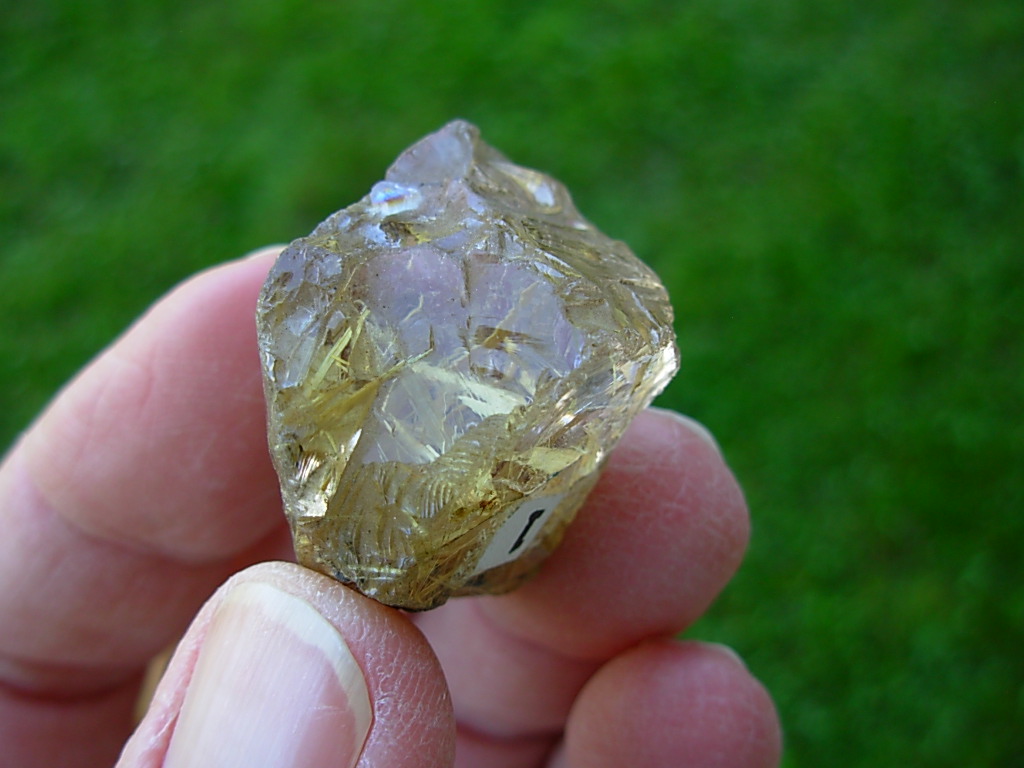
Natural Rutilated Quartz from Brazil
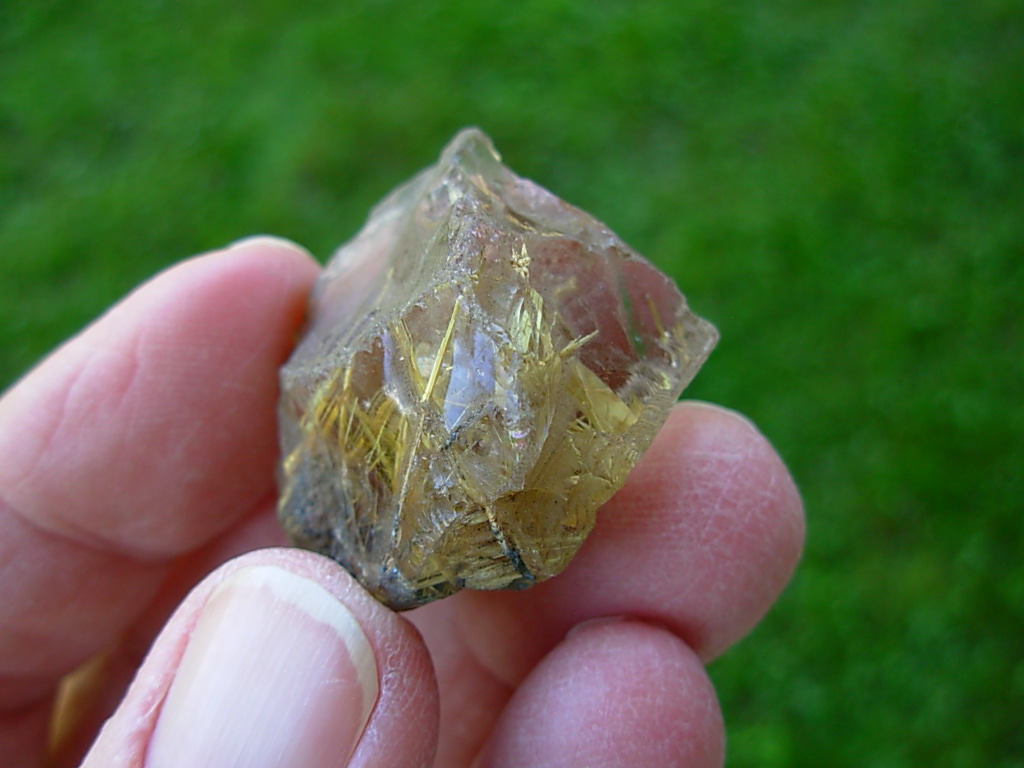
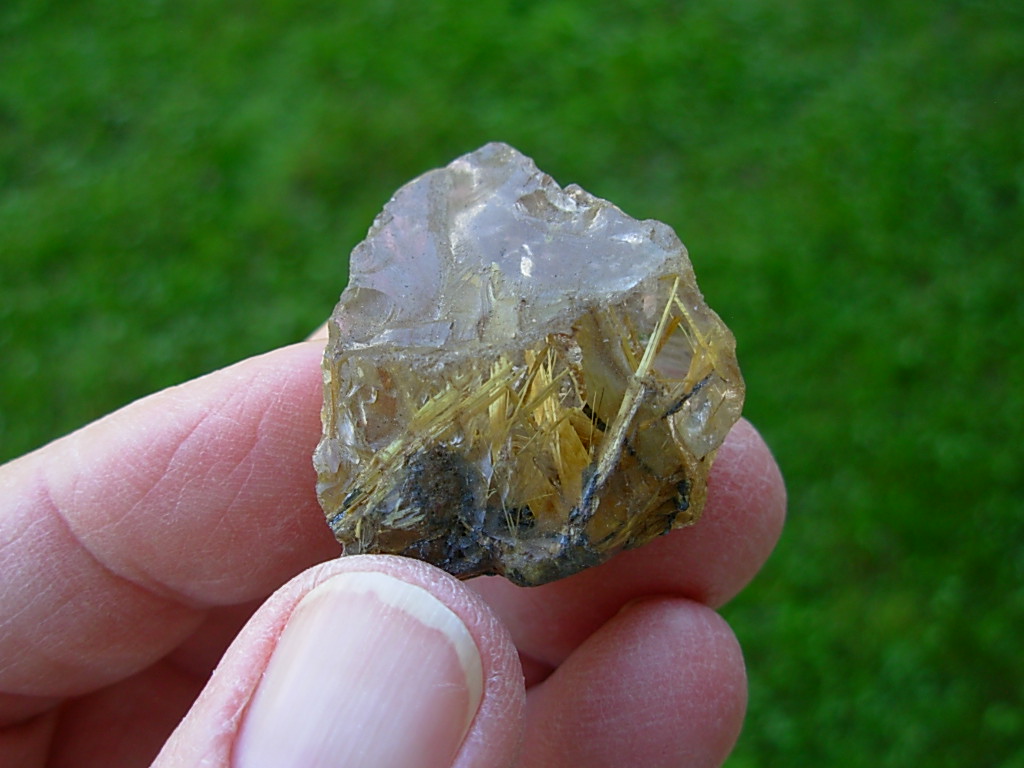
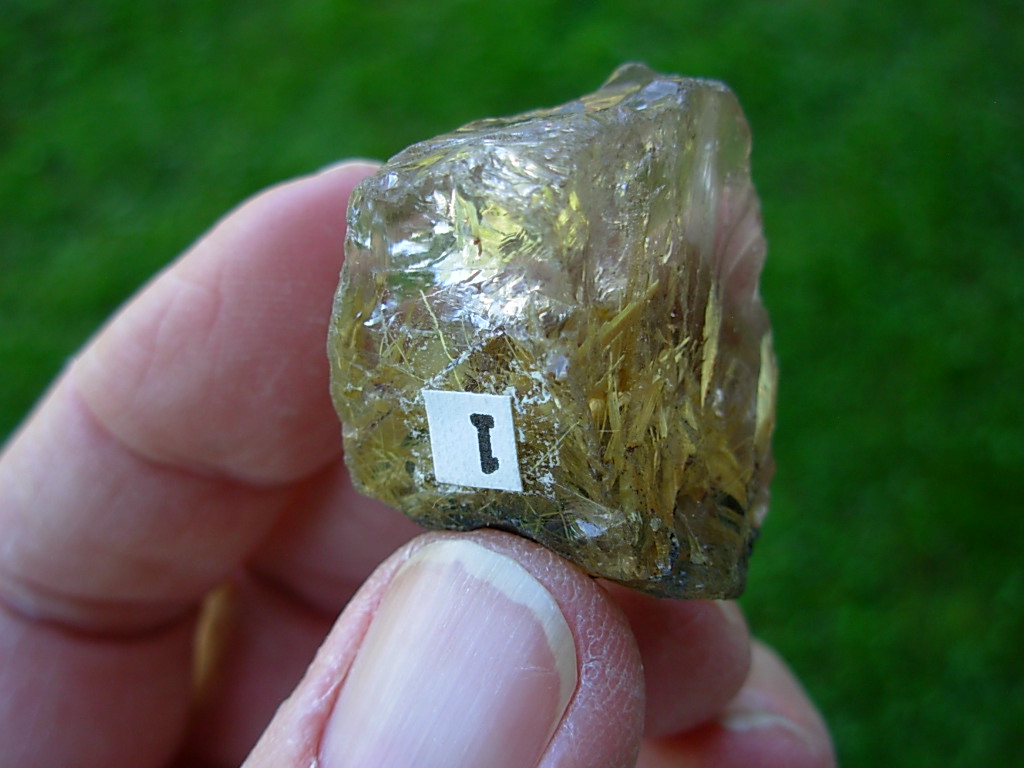
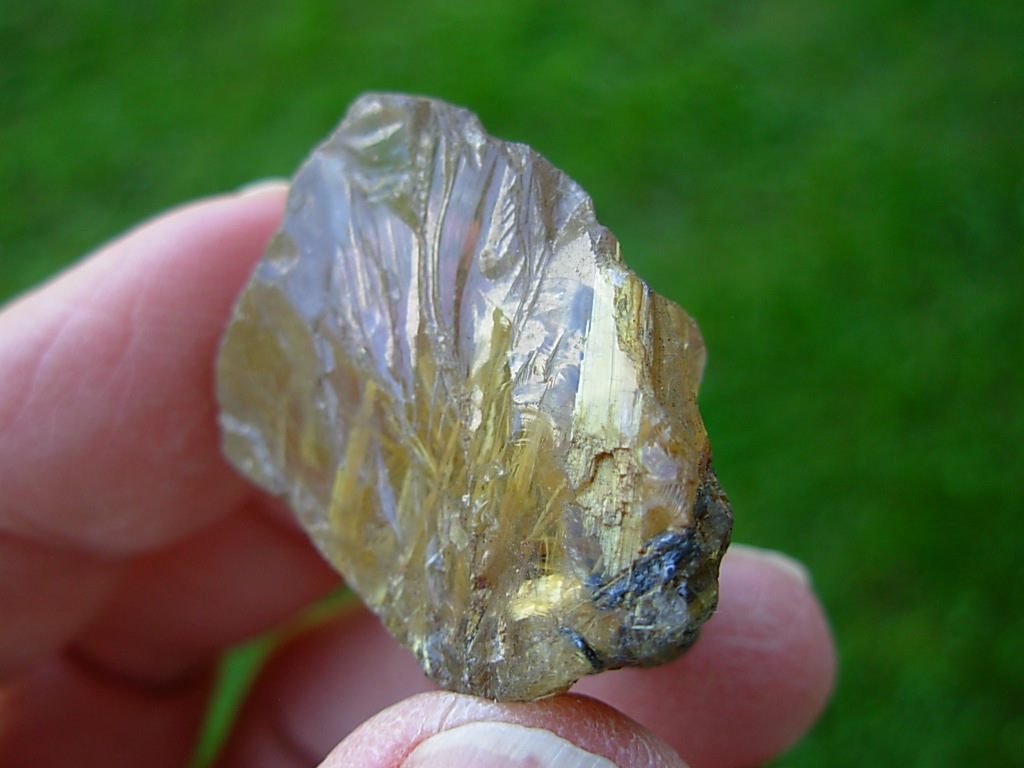
This Natural Rutilated quartz crystal was unearthed in Minas Gerais, Brazil. This rare quality rough crystal of natural Rutilated quartz has very fine transparency with highly visible shiney golden rutile crystals “floating” in the clear quartz crystal. This is the nicest rough piece of Rutilated quartz we have ever found. This specimen was obtained from a Brazilian mine owner in 2007 at Quartzite. It has been in our Personal Collection since we procured it.
This specimen weighs 21.5g and measures 1.2 x 1 x 0.8 inches (3.2 x 2.6 x 2 cm)