Septarians
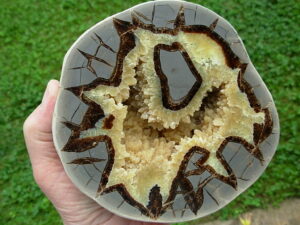
Septarian with Calcite Crystal Vug
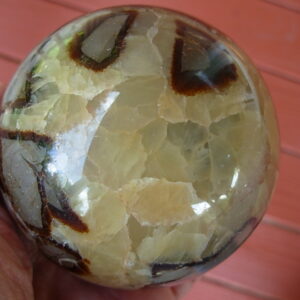
Septarians (aka Septerye or Dragonstone) are a very unique stone found in only a few places on earth. In the USA Septarians are found near Zion National Park in Southern Utah. They are also found in Mahajanga in Madagascar and Morocco. They were formed in an ancient sea floors during the Cretaceous Period (50-70 million years ago). As they weathered out of the gray or tan clay hills, one at a time, they could be picked up on the surface. Now bulldozers are required for their excavation, usually 20-30 feet underground. Septarian nodules are unusual to look at and can vary considerably in color and shape.
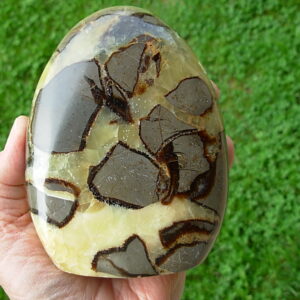
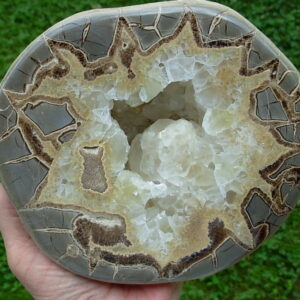
In contrast to most geodes, which are volcanic in nature, Septarians are a form of sedimentary geode. They formed on sea beds millions of years ago and, when they dried out, they cracked and formed hollow interiors. The interiors usually become either partly or completely full with other minerals, such as calcite, giving Septarian its unusual texture and features. Volcanic eruptions killed the sea life and they became trapped in the sediment and formed mud balls, the ocean receded and the balls were left to dry and crack. The ocean returned depositing more shell life above them. As this decomposed, calcite from shells was carried down into the cracks of the mud balls, calcite crystals formed. A thin wall of calcite was transformed into Aragonite dividing the Bentonite clay (shale) exteriors from the calcite centers. Because of this dividing wall (septum in Latin) the geodes are called Septarians.
Yellow centers - Calcite Gray rock - Bentonite
Brown lines - Aragonite White or clear – Barite
Septarian is also known as 'Dragon Stone' Its name 'Dragon Stone' comes from an old Malagasy legend. It is said that when the 'Dragons' died out they fossilized & became part of the sea bed that later became Septereye/Septarian & it is this formation that resembles the 'Scales of Dragons' !! Septarian concretions or Septarian nodules, are concretions containing angular cavities or cracks, which are called "septaria". The word comes from the Latin word septum; "partion", and refers to the cracks/separations in this kind of rock. One occasionally finds the erroneous explanation that it comes from the Latin word for "seven", septem, referring to the number of cracks that commonly occur, but this is incorrect. Septarians may have openings called Vugs ranging in size from large to small, large being cavernous and small being pencil tip size.
The finest quality Septarian comes from Utah