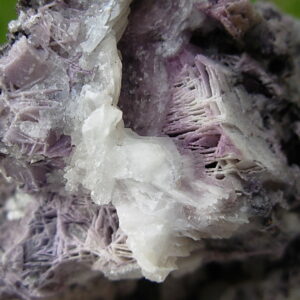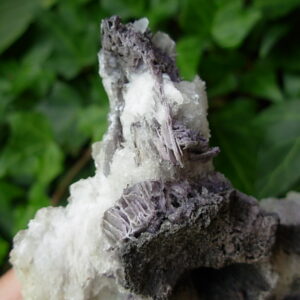
Fluorite VERY RARE Boxwork habit
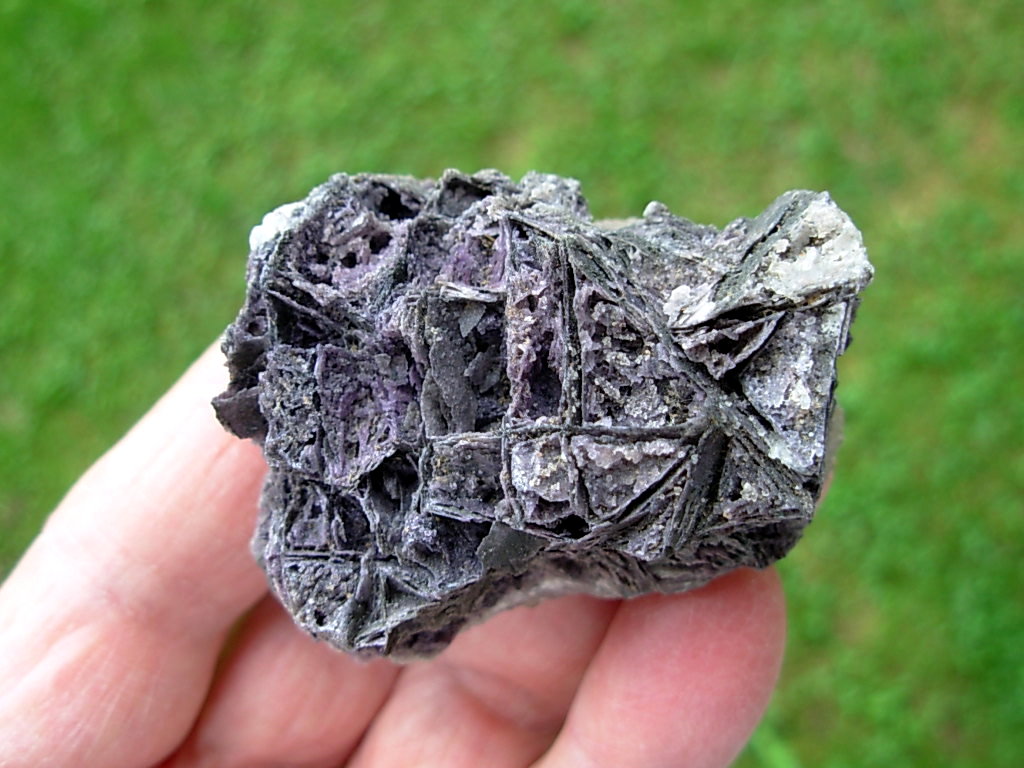
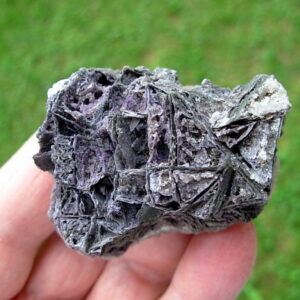
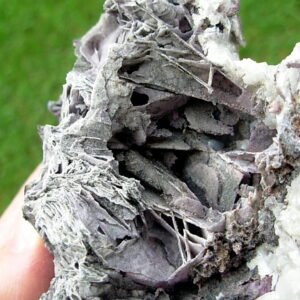
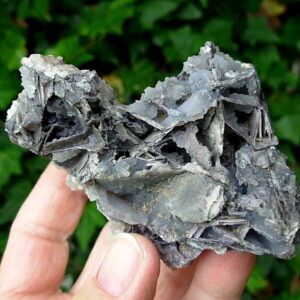
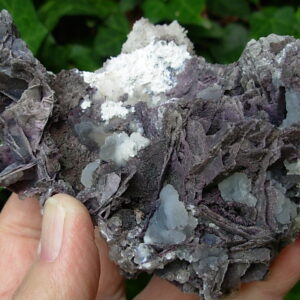
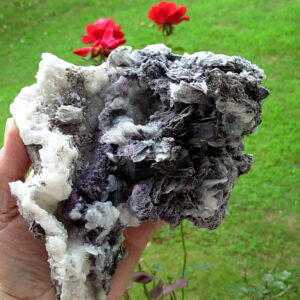
This ultra rare specimen is a classic example of purple Fluorite exhibiting a distinct “boxwork” structure, likely a skeletal epimorph or pseudomorph development. Specifically, it resembles yttrian fluorite (yttrofluorite) or heavily etched fluorite from classic American or European mining localities.
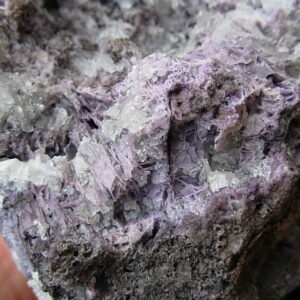
The boxwork pattern occurs when fluorite grows along preferential crystallographic planes or is partially dissolved, leaving behind a network of intersecting thin plates and hollow cavities, often coated with a secondary generation of microcrystalline quartz (druzy quartz) or late-stage fluorite
Since this is an epimorph, a second mineral (like quartz) has precipitated onto the remaining skeleton. These are typically found in hydrothermal vein deposits, often associated with limestone or dolostone host rocks. Classic localities include mining districts in fluorite belts like the Illinois-Kentucky fluorite belt. We were lucky to locate these specimens that were from a 1967 estate find.
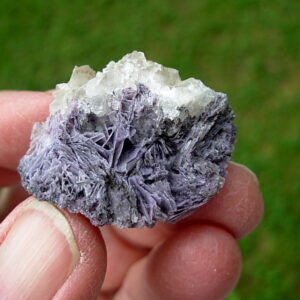
The deep purple to violet-grey coloration is highly characteristic of fluorite containing color centers, often associated with trace elements like yttrium or exposure to natural radiation. These specimens register absolutely no radioactivity when checked with our Mazur Instruments PRM-9000 Nuclear radiation monitor. These were checked to make sure they were safe to handle.
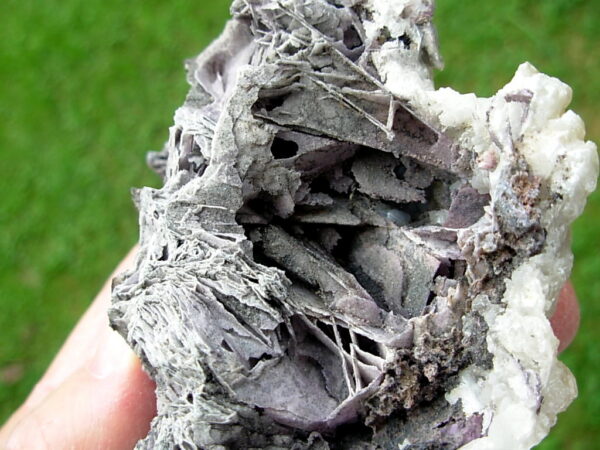
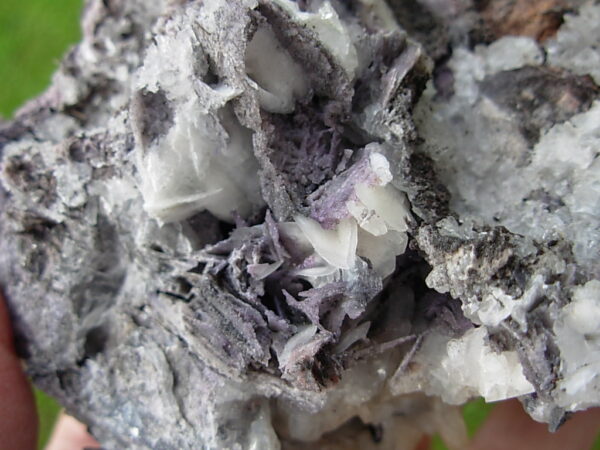
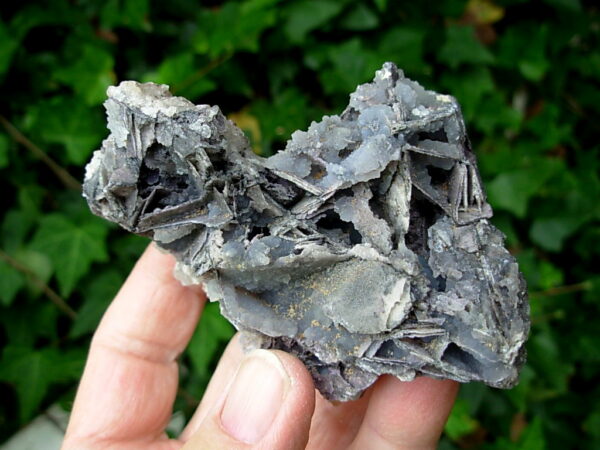
Rarity of Boxwork Fluorite: Boxwork fluorite is relatively rare compared to common fluorite forms. Boxwork habit requires specific hydrothermal conditions to form the characteristic honeycomb structure. While fluorite itself occurs globally, the boxwork habit of small interlocking crystals, that form a lattice or vug structure is less common and often associated with certain mineralized zones or mines.
Formation conditions: Boxwork fluorite develops in hydrothermal veins, pegmatites, or replacement zones where fluorite precipitates in a vug like or honeycomb matrix. This requires specific fluid chemistry, temperature, and pressure, which limits where it can form.
Localities: Notable examples include the Rodgerberg Mine in Namibia, Dalnegorsk in Russia, and some Appalachian hydrothermal quartz zones. These are not common mining areas, so specimens are harder to find and not so readily available. Our pieces came from a geologist estate.
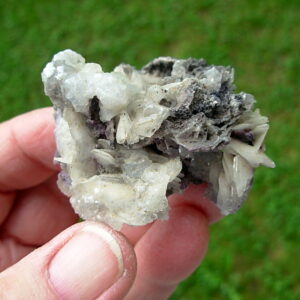
Association with other minerals: Many boxwork fluorite specimens are found alongside quartz, calcite, chalcedony, or other minerals, which can make these epimorph forms more distinctive and collectible. Some of these specimens make excellent fluorescent as well as daylight displays.


Collector value: Because of its unique crystal habit and often striking color zoning, boxwork fluorite can be a prized collector’s piece. Even though fluorite as a species is common, the rarity of the boxwork form and its association with high-quality fluorite colors can bring high prices and even higher yet for more exceptional specimens.
Boxwork fluorite specimens are listed as “rare collector pieces” or rare locale finds. They are not a mass-produced piece and they are sought after by mineral collectors. This scarcity, combined with their visual appeal, makes them more valuable than common massive or cubic fluorite. Its rarity, combined with its beauty, makes it a desirable rare addition to any mineral or fluorite collection.
These wonderful specimens have been on our shelves for over a decade while we were trying to find information about these ultra rare pieces. Searches finally helped us determine they had boxwork formations. We spent years of researching, until one lucky day, we found information about boxwork fluorite and its associated minerals. We would like to give credit for that information, but it was an AI generated answer, with no references. Thank you to whom ever that information originally came from. Once we had the information we were able to verify individual parts and components of this information. To the best of our knowledge and ability this information is accurate.
We believe that these came from a Western United States fluorite belt because the individual who had these pieces in his collecton was JR Steinhauser, a geologist. He worked for the Atomic Energy Comission in the 1940's and 1950's researching mining locales and operations in the Western United States. Since these were in his personal collection we were not worried about radioactive specimens, but like we said above, we checked them all with our Mazur Instruments PRM-9000 Nuclear radiation monitor. These were all checked just to make sure they were safe to handle.
Once in a Lifetime Offer of Specimens for Sale
Once these are gone there are no more available
-

Boxwork Fluorite 1
$69.00 Add to cart -
Boxwork Fluorite 10
$175.00 Add to cart -
Boxwork Fluorite 2
$52.00 Add to cart -
Boxwork Fluorite 3
$49.00 Add to cart -
Boxwork Fluorite 4
$129.00 Add to cart -
Boxwork Fluorite 5
$225.00 Add to cart -
Boxwork Fluorite 6
$315.00 Add to cart -
Boxwork Fluorite 7
$495.00 Add to cart -
Boxwork Fluorite 8
$445.00 Add to cart -
Boxwork Fluorite 9
$165.00 Add to cart