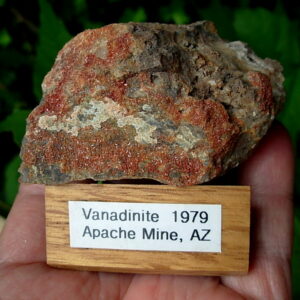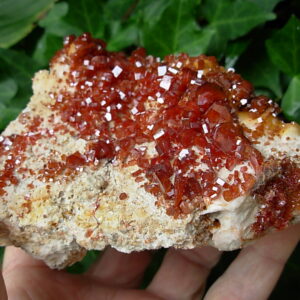
Vanadinite
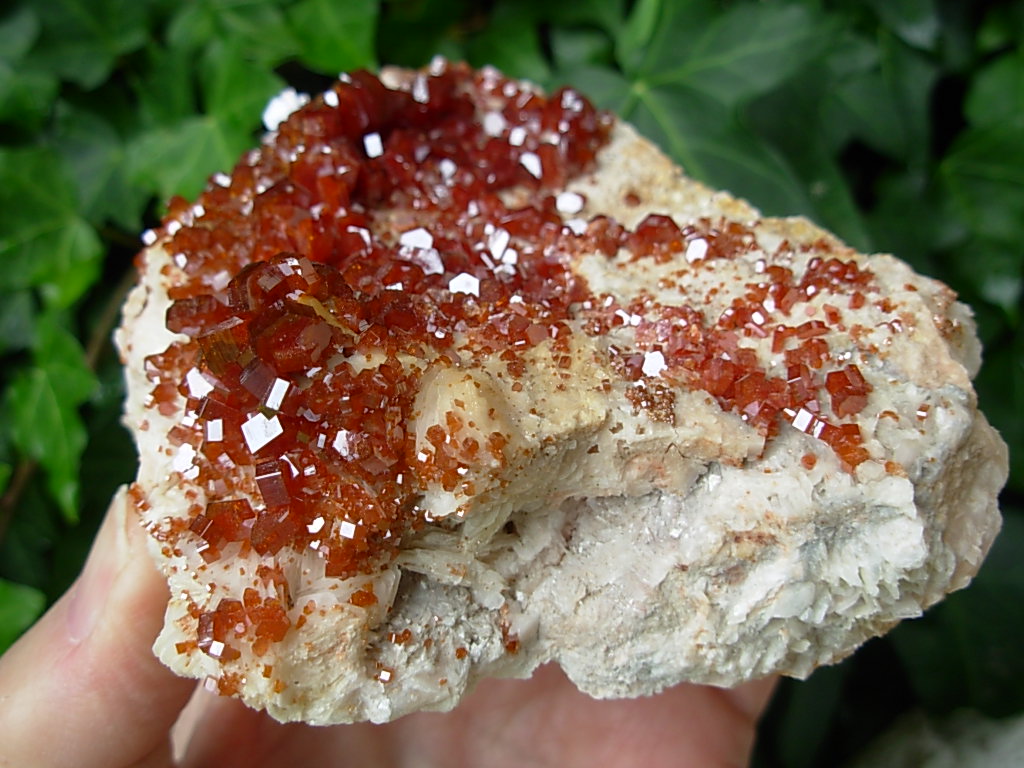
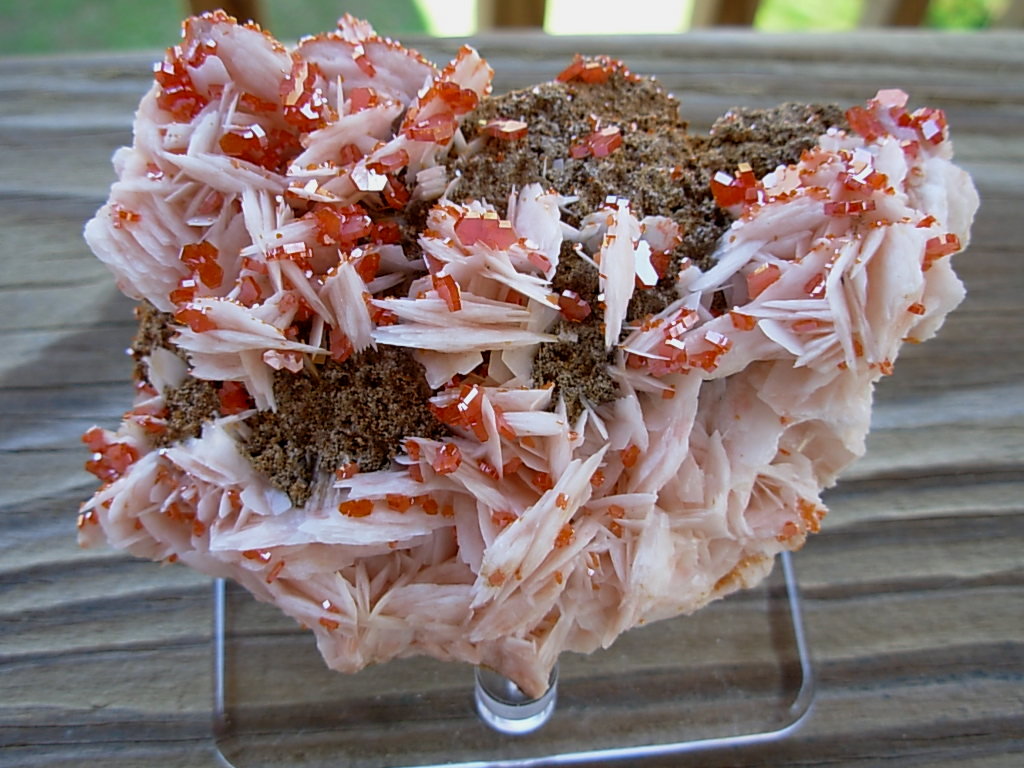
Vanadinite
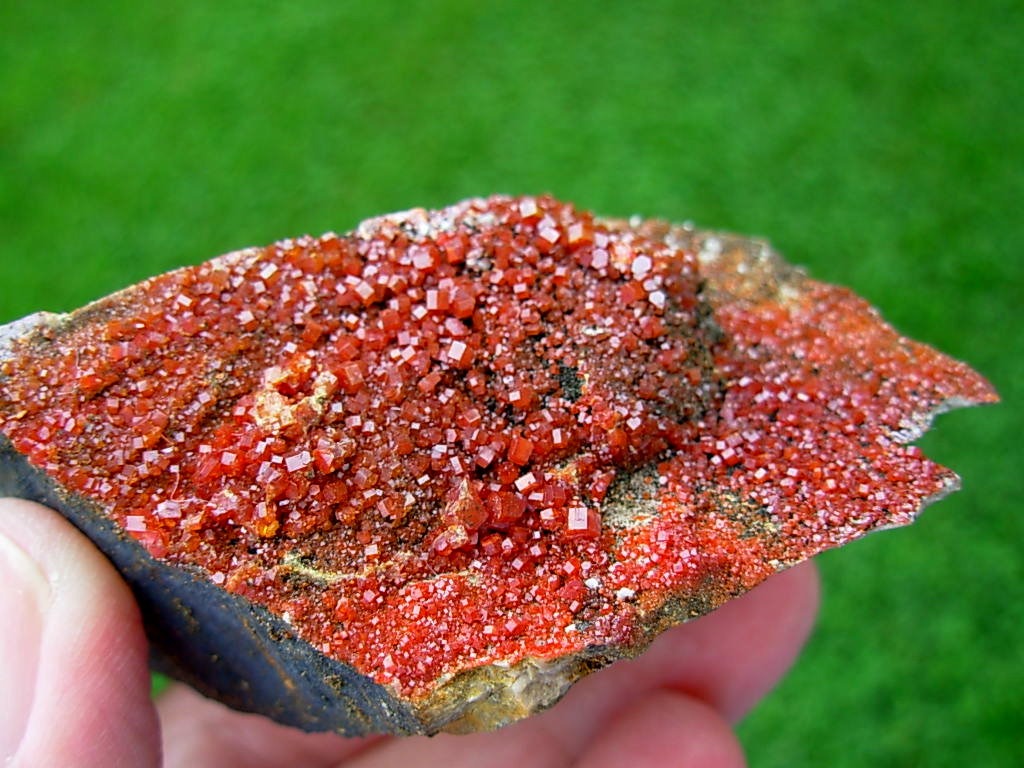
Vanadinite is a lead vanadate mineral known for its bright red, orange, or brown hexagonal crystals and as an important ore of vanadium. Vanadinite belongs to the apatite group of phosphates and is composed primarily of lead, vanadium, oxygen, and chlorine. It is classified as a secondary mineral, forming through the chemical alteration of pre-existing lead minerals, particularly galena (lead sulfide). Vanadinite is a minor source of lead and one of the main industrial ores of vanadium, which is extracted for use in steel alloys and chemical applications.
Vanadinite is dense and brittle, with a specific gravity ranging from 6.6 to 7.2, making it noticeably heavy for its size. Its crystals are typically short hexagonal prisms, sometimes forming barrel-shaped or globular masses. The mineral exhibits a resinous to sub-adamantine luster and is usually bright. It has a Mohs hardness of 3–4, an uneven to conchoidal fracture, and a white to pale yellow streak. Vanadinite is slightly soluble in water and can produce a green flame when heated due to vanadium content.
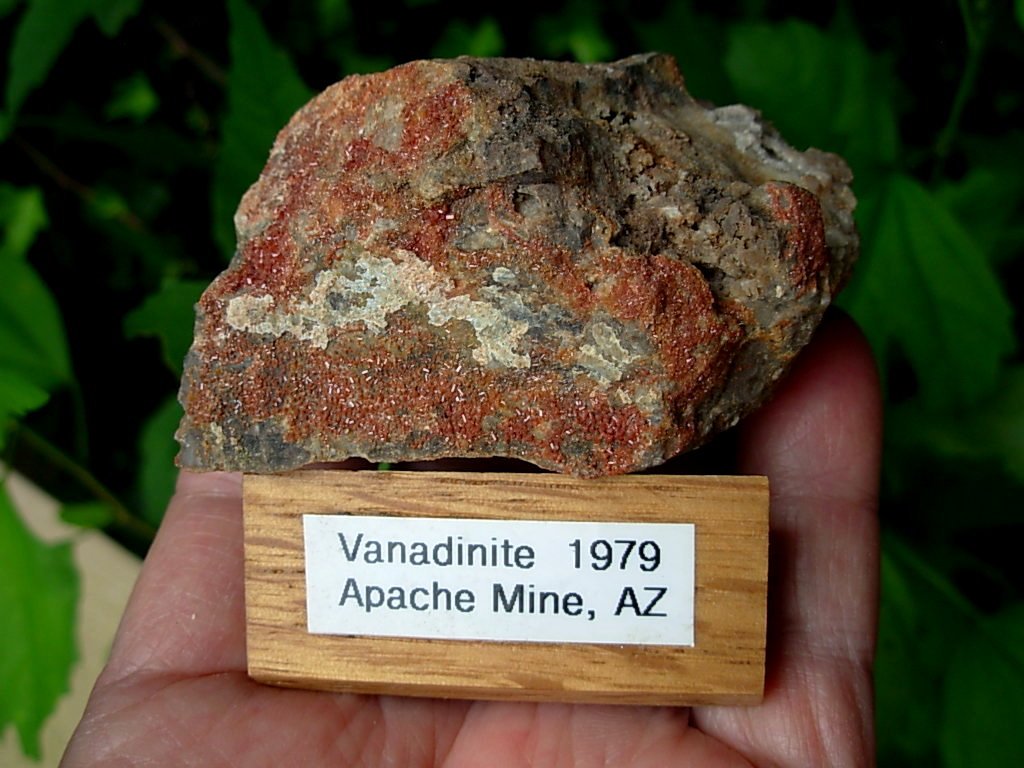
Vanadinite forms in the oxidation zones of lead deposits, particularly in arid climates, where vanadium-bearing solutions interact with lead-rich minerals. It is often associated with minerals such as wulfenite, limonite, barite, pyromorphite, and mimetite. Notable deposits have been found in Mexico, Morocco, South America, Europe, Africa, and North America
Vanadinite is an important ore of vanadium, which is extracted through processes involving roasting with sodium salts and subsequent chemical treatments to produce vanadium pentoxide (V₂O₅). It is also occasionally used as a source of lead. Beyond industrial applications, vanadinite is highly prized by mineral collectors for its vivid colors, high luster, and distinctive hexagonal crystals.
The mineral was first discovered in Mexico in 1801 by Andrés Manuel del Río, who initially believed it contained a new element he called “pancromium” or “erythronium”. Later, the element vanadium was officially recognized in 1830, and vanadinite became known for its vanadium content. Vanadinite’s combination of striking appearance, geological importance, and industrial value makes it a unique and fascinating mineral for both scientific study and collection.
https://en.wikipedia.org/wiki/Vanadinite, https://geology.com/minerals/vanadinite.shtml, https://geologyscience.com/minerals/phosphates/vanadinite/